
Last updated October 17, 2026
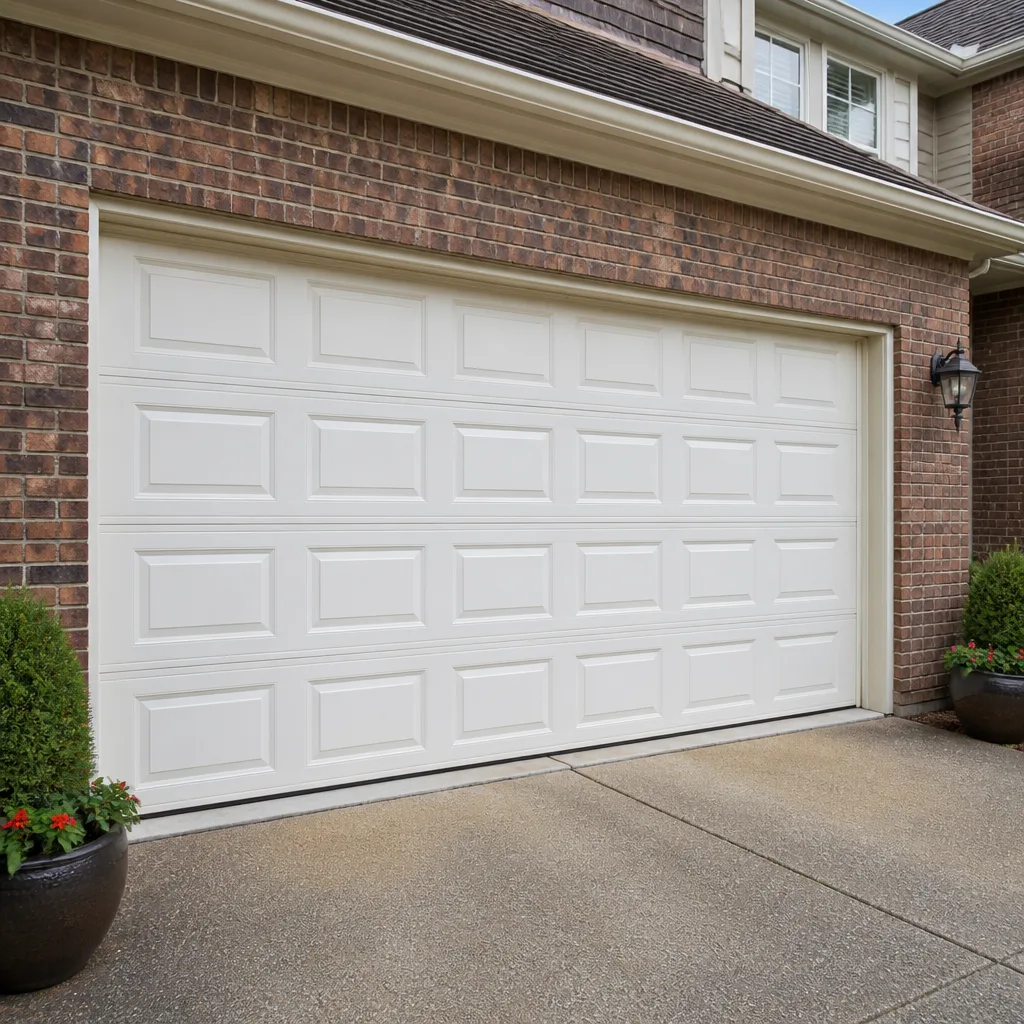 Raised-panel steel
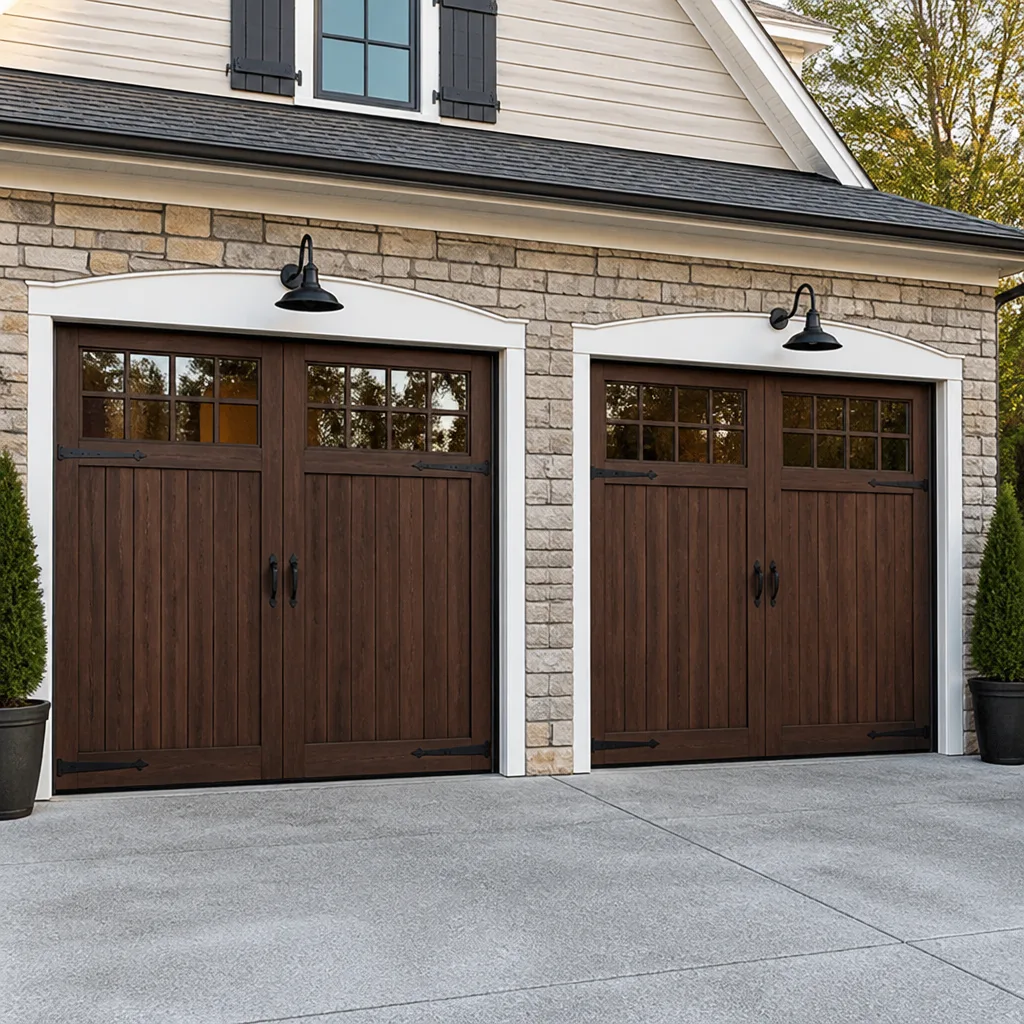 Carriage house
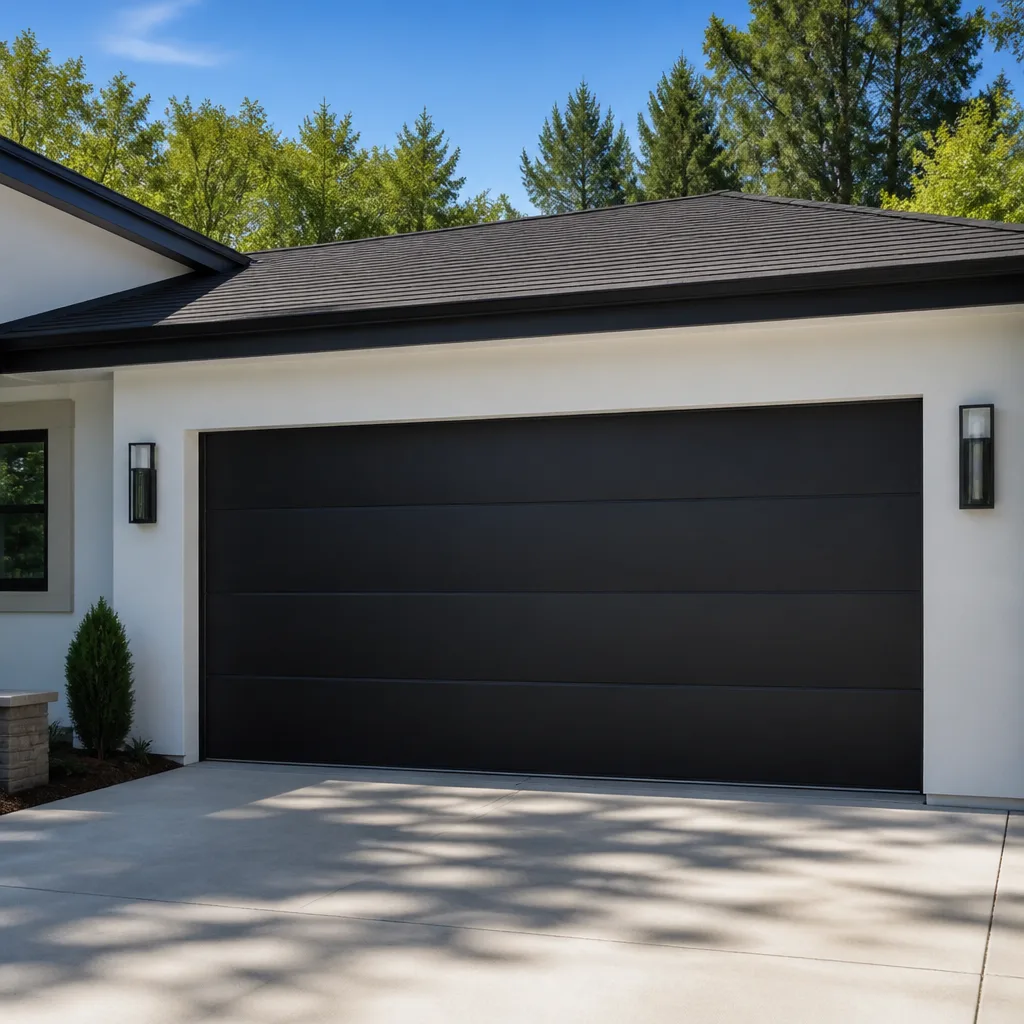 Modern flush
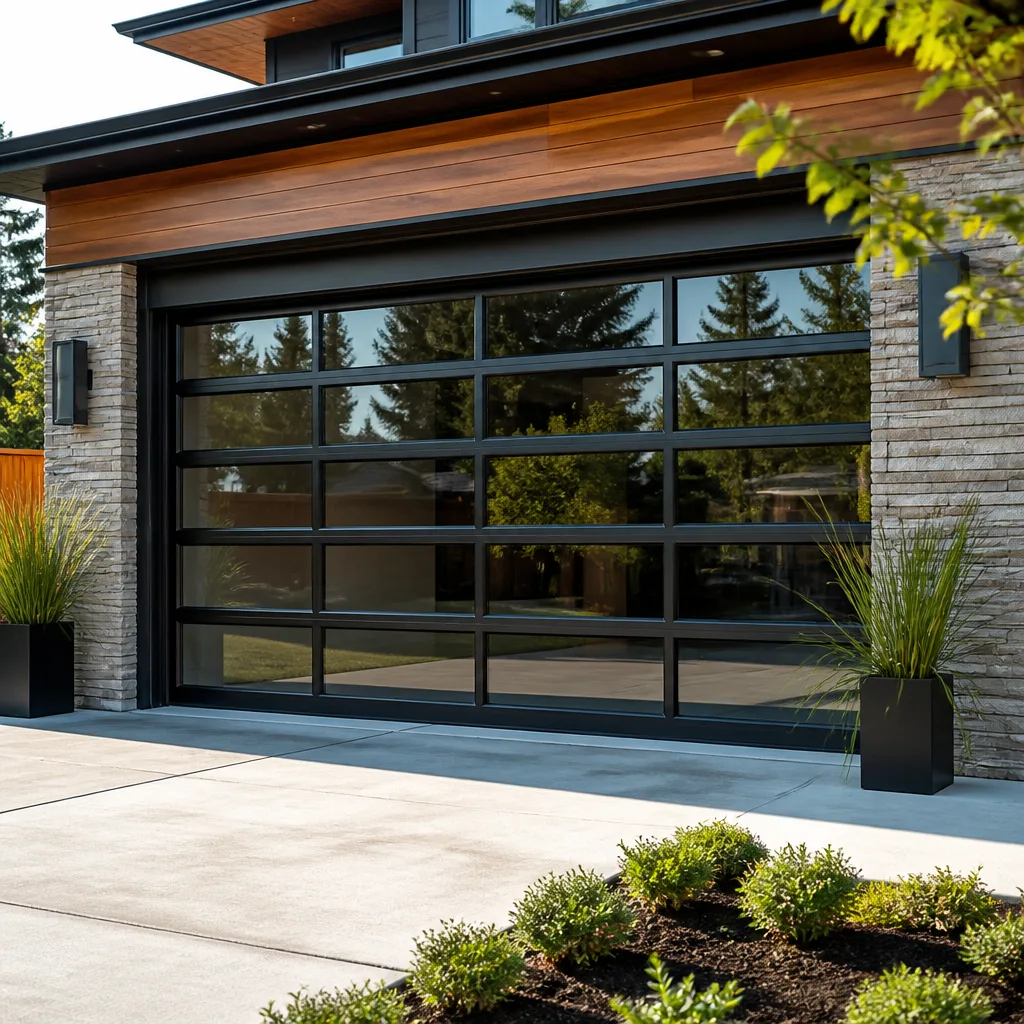 Full-view glass
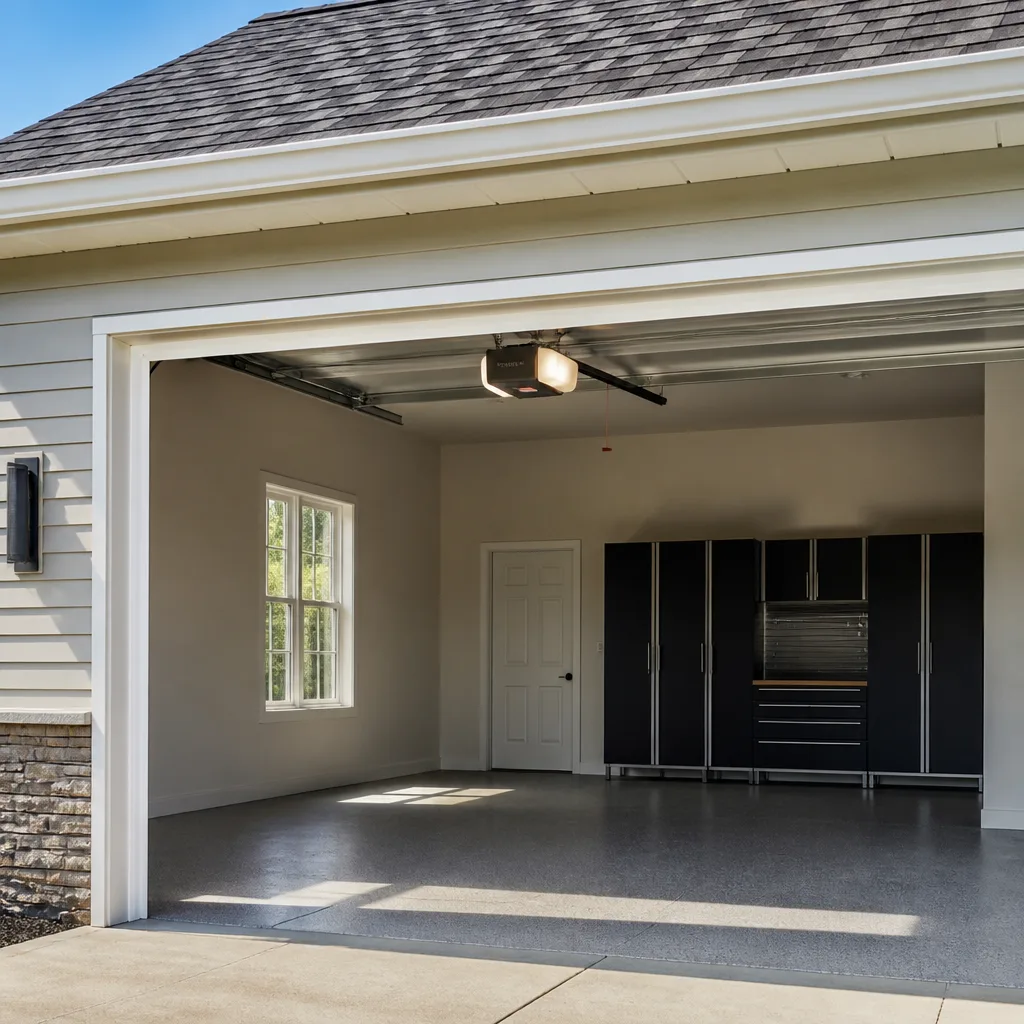 LiftMaster openers
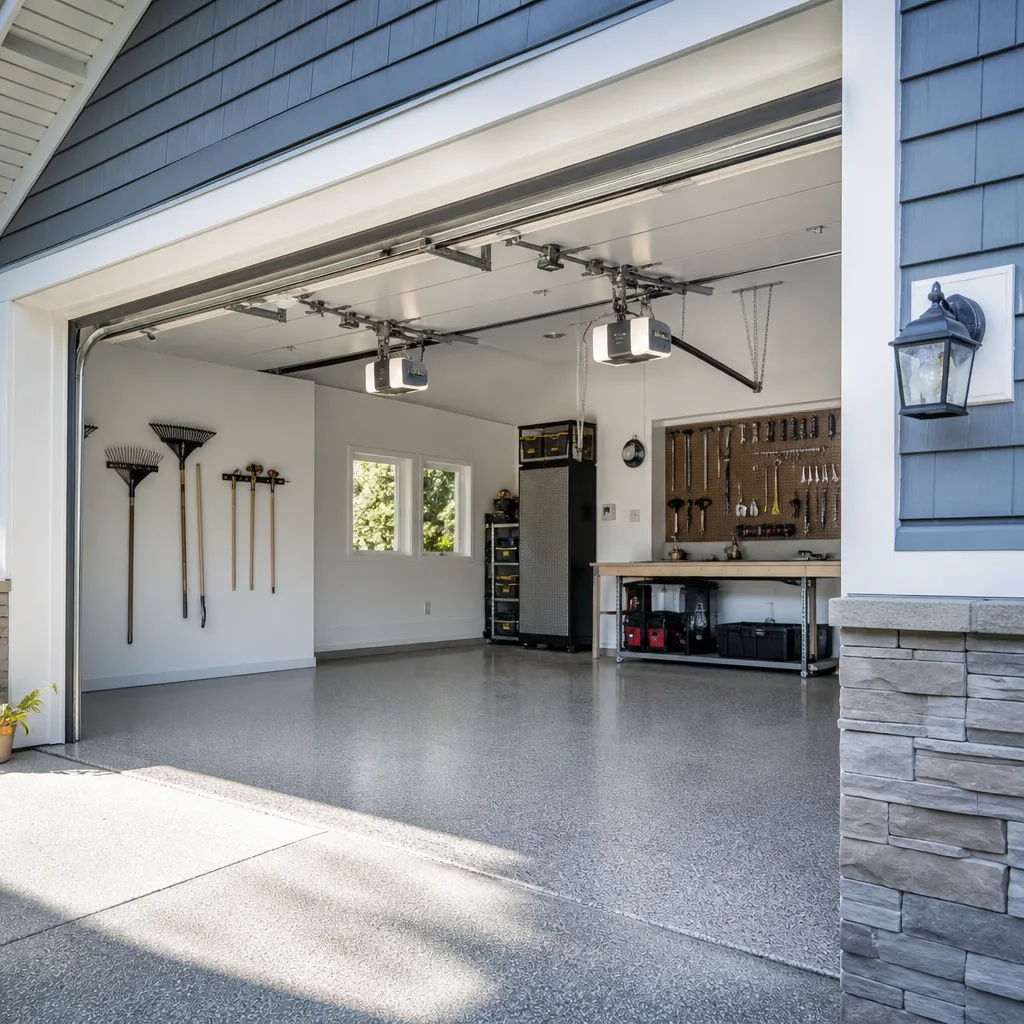 Chamberlain openers
Full 25-point door and opener safety check with every visit - springs, cables, rollers, tracks, and your LiftMaster or Chamberlain opener included
You get a price before we start. It does not change when the truck arrives.
Get your free estimateGarage Door Repair Maintenance Checklist for Alpharetta Homeowners
A garage door gives you roughly three to five audible and visual warnings before it fails completely. Most homeowners in Alpharetta notice them and assume the door is “just getting old,” when each one has a specific, fixable cause. A hinge that squeaks at the halfway point means something different than a roller that rattles through the curve. A door that hesitates for half a second before lifting is talking to you. This guide teaches you to hear what the door is saying and catch the small fixes before they become emergency calls in July heat or January cold snaps.
Styles & brands we work with
Quick Answer
A garage door maintenance checklist for Alpharetta homeowners should focus on listening for changes in sound, watching for changes in door speed, and inspecting the rollers, hinges, springs, and weatherstripping every 6 months. The most important checks are a manual balance test, a close-look at the bottom seal for Georgia humidity damage, and listening for grinding versus squeaking, which tells you whether the problem is lubrication or wear. Most checks take under 10 minutes and prevent repairs that average $150 to $500.
Table of Contents
- The Sensory Checklist: What to Listen For, Feel For, and Look For
- Lubrication: Which Parts Get Which Product, and How Much Is Too Much
- The Twice-a-Year Balance Test Every Alpharetta Homeowner Should Do
- Georgia Humidity and Your Bottom Seal: What Alpharetta’s Climate Does Differently
- The Maintenance Log: What to Record and Why It Matters
- Monthly, Quarterly, and Seasonal: A Schedule That Actually Works
- Common Mistakes to Avoid
- When to Call a Professional
- Frequently Asked Questions
- The Bottom Line
The Sensory Checklist: What to Listen For, Feel For, and Look For
The standard maintenance checklist says “inspect rollers and hinges.” It doesn’t tell you what you’re listening for when the door moves. After years of Garage Door Repair in Alpharetta work, our technicians can diagnose most problems from the hallway before they touch the door. Here’s how to train your ear the same way.
Sounds that mean something specific:
- A squeak that stays in one spot: That’s a dry hinge or roller bearing at a fixed point in the track. It means lubrication now, before heat and friction wear the part.
- A grinding sound through the whole cycle: That’s metal-on-metal wear, not dryness. Lubricating won’t fix it. A roller bearing is shot or a hinge pin is worn. This is the sound of a repair, not a maintenance task.
- A rattle when the door moves but not when it’s still: Loose hardware. Bolts and brackets vibrate when the door passes. Tighten what you can reach, but leave the bottom bracket bolts alone. The bottom bracket holds cable tension and is the one piece of hardware a homeowner should never loosen.
- A popping sound at one point in the travel: A section hinge binding, or a roller hitting a track seam. In Alpharetta’s summer humidity, track metal expands enough to shift those seams slightly. A pop that appears in July and disappears in November is often thermal.
Feel for this:
Place the palm of your hand flat against the door panel while it moves. You should feel a smooth, even vibration, like a quiet appliance running. If you feel a hitch, a thump, or a skip, the door is encountering resistance somewhere. That resistance is wearing your opener motor and stressing the springs.
Look for this:
Stand inside the garage with the door open and look along the track line from one end to the other. Both tracks should run parallel and straight. A visible bow or wave means the track has taken a hit or shifted. Also look at the gap between the door and the side jamb. In Alpharetta, where red clay soil shifts with rain and drought, foundations move enough to throw a door slightly out of square. A gap that’s wider at the bottom than the top is a door alignment issue, not weatherstripping – and it gets worse if ignored.
Lubrication: Which Parts Get Which Product, and How Much Is Too Much
The single most common mistake we see in Alpharetta garages is over-lubrication. A homeowner sprays white lithium grease everywhere, the door goes quiet for a week, and then the grease collects Georgia dust and road grit. The door starts grinding worse than before, and dripping grease streaks the driveway and the floor. Sometimes it drips onto a car.
The rule is simple: oil the bearings, not the surfaces. Spray on a rag and wipe it on, don’t spray the part directly.
- Rollers: If they’re steel rollers with exposed bearings, a drop of silicone spray or lightweight machine oil on the bearing at the center of the wheel, not on the wheel itself. If they’re nylon rollers with sealed bearings, leave them alone entirely. Spraying the wheel surface does nothing but attract dirt.
- Hinges: A drop of light oil at the pivot pin where the metal pieces move against each other. One drop is enough. Wipe away any excess.
- Springs: Torsion springs need a light coat on the coil surface to prevent rust, which is a bigger concern in Alpharetta’s humid summers than in dry climates. Use a dedicated garage door spring lubricant or a spray silicone. Do NOT use WD-40 – it’s a solvent that strips oil, not a lubricant. Do NOT touch the spring itself with your fingers. Spray the coil surface and step back.
- Track: Never lubricate the track. The rollers are designed to roll on dry metal. Grease on the track turns it into a slide, and the door will bind.
Chamberlain and Genie both manufacture opener systems with maintenance-free nylon gears, but the lubrication rules above apply to the door hardware regardless of brand. Clopay and Amarr doors ship with specific lubrication guidance for their roller and hinge hardware, and in our experience the cadence is roughly the same: every six months, a light application, and wipe it clean. More than that is not better.
The Twice-a-Year Balance Test Every Alpharetta Homeowner Should Do
A door that’s out of balance is the number one thing we find on service calls that could have been caught at home. Here’s the test and what the result tells you.
- Pull the red release cord on the opener to disconnect the door from the motor.
- Lift the door by hand to the halfway point, about waist height.
- Let go.
What should happen: The door stays where you put it, or drifts slowly by an inch or two. That means the springs are holding the correct counterweight.
If the door falls when you release it: The springs are losing tension. The opener motor is now doing the lifting work that the springs once did. That wears the motor, the gears, and the door sections. It’s the doorway to a $500 repair, not a $10 maintenance fix.
If the door rises when you release it: The springs are carrying too much tension. This is less common but happens after a spring replacement when the wrong spring was installed, or after temperature changes alter the spring’s behavior. In Alpharetta, the shift from 90-degree summer afternoons to 20-degree winter mornings affects spring mechanics measurably. A door that rises in the winter may have been properly balanced in the summer.
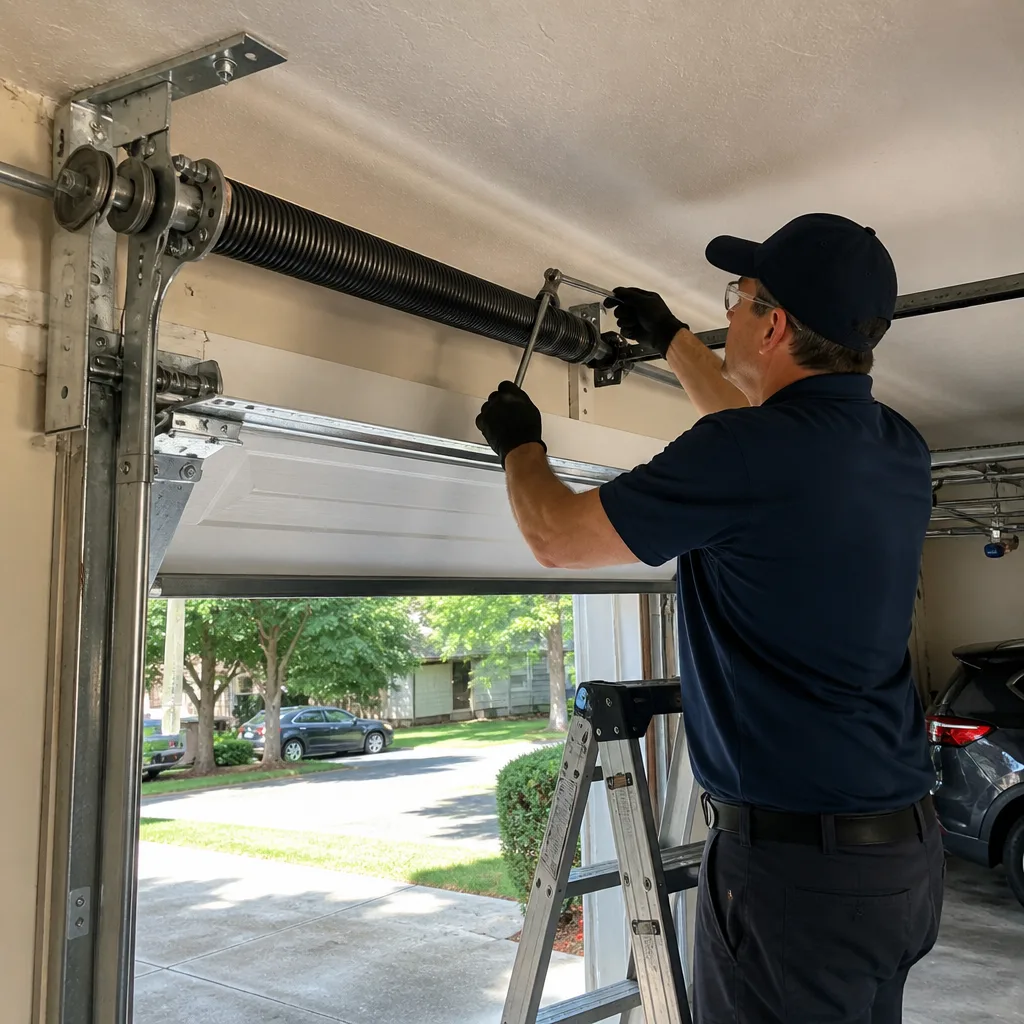
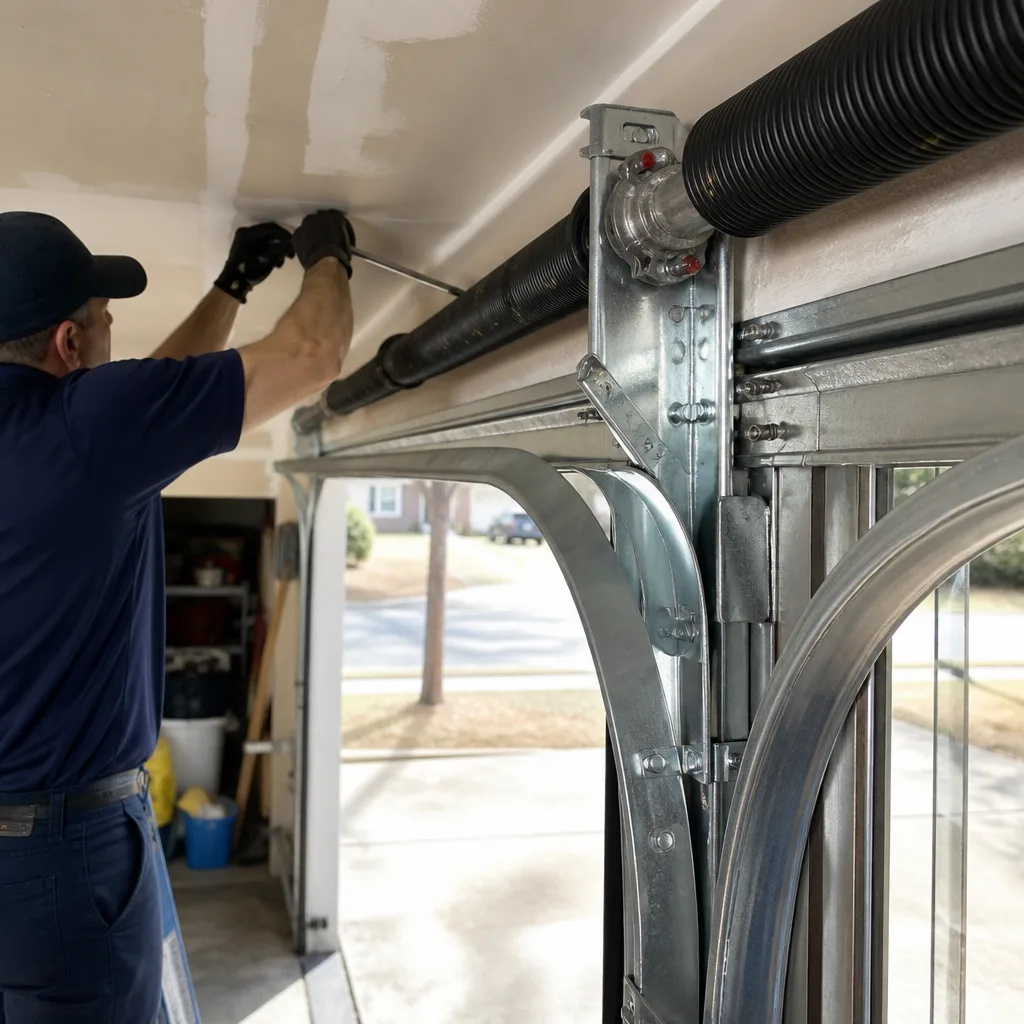
Important safety note: Garage door springs, especially torsion springs mounted above the door, are under enormous tension. The balance test is safe for anyone to perform because it doesn’t require touching the spring. But adjusting spring tension is not a homeowner task. If the balance test fails, call Garage Door Spring Repair in Alpharetta for a professional adjustment. A spring that lets go during a DIY adjustment can cause serious injury. Our technicians carry the right winding bars and the right training. A spring failure is a controlled, specific repair, not a guess.
Georgia Humidity and Your Bottom Seal: What Alpharetta’s Climate Does Differently
In dry climates, weatherstripping dries and cracks. In Alpharetta, it does the opposite: it absorbs moisture, softens, and deforms. The bottom seal on a garage door in Alpharetta takes punishment from two directions. During summer storms, water pools at the door base and the rubber sits in it. During the hot afternoons before the storm, the concrete driveway radiates heat that softens the rubber. The seal deforms, then hardens in that deformed shape, and then the next storm pushes water under it.
What to look for:
- Daylight under the door. Close the door and look from inside. If you can see a sliver of light along the floor, the seal has lost contact.
- A seal that’s flattened and won’t spring back. New seals have a rounded profile. A worn seal looks pressed flat and stays flat.
- Water lines or debris inside the garage after rain. Alpharetta gets heavy afternoon thunderstorms, and the water that ends up under your door has clay sediment in it. That reddish line is a sign your seal failed during the last storm.
Replacement interval: In Alpharetta’s climate, we recommend replacing the bottom seal every 2 to 3 years, sooner if your driveway slopes toward the door and channels water directly at it. It’s a $30 to $60 part and the installation on most doors takes under 30 minutes. Delaying turns a seal replacement into a floor repair, and that conversation is much more expensive.
The Maintenance Log: What to Record and Why It Matters
A maintenance log only works if it’s simple enough to actually use. A spiral notebook on the garage shelf, a note in your phone, or a printed sheet taped inside the cabinet door all work. What we recommend recording, at minimum:
- The date of each balance test and the result (held, fell, rose).
- The date you lubricated and what you used.
- The date you replaced the bottom seal or any weatherstripping.
- Any new sound you noticed and when you first heard it.
- Any work done by a professional, with the date and what was replaced.
Here’s what the log buys you. When you sell your Alpharetta home, the log is documentation that the garage door was maintained, which matters to a buyer inspecting the property. When a part fails under warranty, the manufacturer wants to see evidence of regular maintenance, and a log with dates and products is evidence. When our technician arrives for a repair, the log tells them what’s been done and what hasn’t. A homeowner who can say “I lubricated in April and the grinding started in August” gives us a head start that saves diagnostic time.
We also recommend noting the door brand and model somewhere on that log page. Clopay and Amarr doors have different hardware configurations, and knowing the brand before a phone call speeds the whole process.
Monthly, Quarterly, and Seasonal: A Schedule That Actually Works
Most maintenance schedules fail because they’re too vague. “Inspect the door regularly” doesn’t survive a busy week. Here’s a specific rhythm, built around Alpharetta’s seasons.
Every month (5 minutes):
- Run the door through one open-and-close cycle and listen. Note any new sound.
- Check the bottom seal for daylight or flattening.
- Clear leaves, pine needles, or Georgia red clay debris from the track bases.
Every quarter (15 minutes):
- Do the manual balance test.
- Lubricate hinges and steel roller bearings if they’re dry.
- Check all visible bolts and brackets. Tighten what’s accessible, leave the bottom bracket alone.
- Check the safety sensor alignment. The two sensors near the floor on either side should have solid lights, not blinking. A blinking light means they’re out of alignment or blocked.
Every spring (April in Alpharetta): Replace the bottom seal if it’s 2+ years old, before thunderstorm season. Test the auto-reverse by placing a 2×4 flat in the door’s path. The door should reverse when it contacts it. Check the opener’s manual release cord for fraying.
Every fall (October in Alpharetta): Repeat the balance test after the summer heat ends. Heat stress accumulates over the summer, and fall is when we see the highest volume of balance-related calls in Alpharetta. Check the top panels for warping from afternoon sun exposure, which is more pronounced on west-facing doors.
Common Mistakes to Avoid
- Lubricating the track. The track is meant to be dry. Grease on the track creates a sticky, grinding mess that Georgia dust makes worse. If someone told you to grease the track, they were wrong.
- Using WD-40 as a lubricant. It’s a cleaner and moisture displacer. It strips whatever oil was there. Use a silicone spray or a dedicated garage door lubricant.
- Over-lubricating to quiet a grinding door. Grinding means wear, not dryness. Extra oil hides the symptom for a week and then the grind returns with grit mixed in.
- Ignoring a door that opens slower than it used to. Slow operation means the springs are tired, the opener is straining, or the rollers need replacement. All three are cheaper to fix today than after the failure.
- Touching spring hardware during “maintenance.” Springs under tension are the one component that should never be adjusted, loosened, or removed by a homeowner. Call a professional.
- Neglecting the bottom seal until after the first flood. In Alpharetta, a failed seal during a July thunderstorm means more than a wet floor. Water follows the slab and reaches drywall, tools, and stored boxes. A $40 seal beats a $400 cleanup.
- Assuming the opener is the problem when the door is hard to lift. If you disconnect the opener and the door is heavy, the springs are the issue. Replacing the opener won’t fix a spring problem, and we’ve seen homeowners replace perfectly good openers for lack of a balance test.
When to Call a Professional
Some maintenance tasks are homeowner work. Some are not. Call a professional for spring adjustment or replacement, any cable repair, track realignment that requires removal, and anything involving the bottom bracket, which holds cable tension. A safety sensor that won’t align after a basic cleaning and adjustment is also worth a call. In Alpharetta, Fernbrook Garage Doors Alpharetta home service offers free estimates, and the phone is answered by a live person 24/7. Call (229) 471-5755 to talk through what you’re seeing or hearing. If you’re planning a full Garage Door Installation in Alpharetta, we can measure and price it before any work starts.
Frequently Asked Questions
Run a quick listen-and-look check every month, do a balance test and basic lubrication every quarter, and plan to replace the bottom seal every 2 to 3 years because Alpharetta’s humidity and summer storms wear rubber differently than dry-climate locations.
Grinding typically means metal-on-metal wear in a roller bearing or hinge, not a lack of lubrication. Lubrication will quiet it briefly, but the noise returns because the part itself is worn. Call (229) 471-5755 for a free estimate or see our guide to hiring a contractor if the grind persists after a light lubrication.
Slower operation usually means the springs are losing tension and the opener motor is working harder to lift the door. It’s a sign to check the balance by disconnecting the opener and lifting the door manually. A heavy door means spring service is needed.
No. Garage door springs, especially torsion springs, are under extreme tension and can cause serious injury if they release unexpectedly. Spring repair and replacement should be done by a trained technician. Fernbrook’s technicians are background-checked, uniformed, and trained on the spring systems of all major brands.
Basic maintenance you do yourself costs under $20 in supplies. Professional maintenance visits in Alpharetta typically run from $89 to $189 depending on the scope, and part replacements like bottom seals run $30 to $60 for the part plus labor. Every Fernbrook job includes a written price before any work starts.
Yes. Our technicians are trained on eight major brands including Chamberlain, Genie, Clopay, Amarr, LiftMaster, Wayne Dalton, Craftsman, and Raynor. We service what’s on your door, not just one or two brands.
The Bottom Line
A garage door in Alpharetta lives with humidity, red clay, afternoon thunderstorms, and temperature swings that stress every part. The maintenance that matters is sensory: listen for new sounds, watch for slow movement, feel for hitches, and look at the seal. Do the balance test twice a year. Keep a simple log. And when something falls outside what the checklist covers, check our more guides & resources or call someone who knows the difference between a squeak and a grind before it turns into an emergency call. The door is telling you what it needs. This checklist helps you hear it.
Written by Jesse Calder, Owner at Fernbrook Garage Doors Alpharetta, serving Alpharetta since 2002.
See the difference
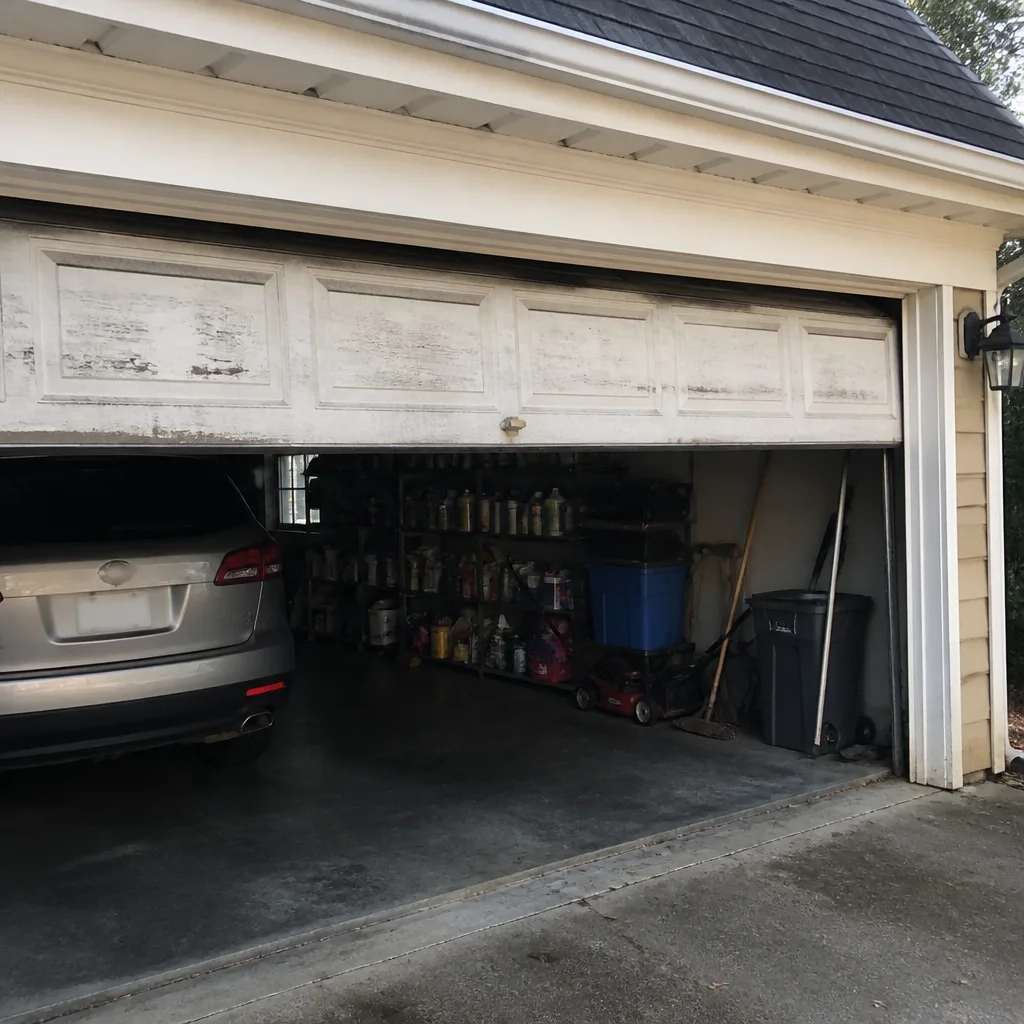 Before
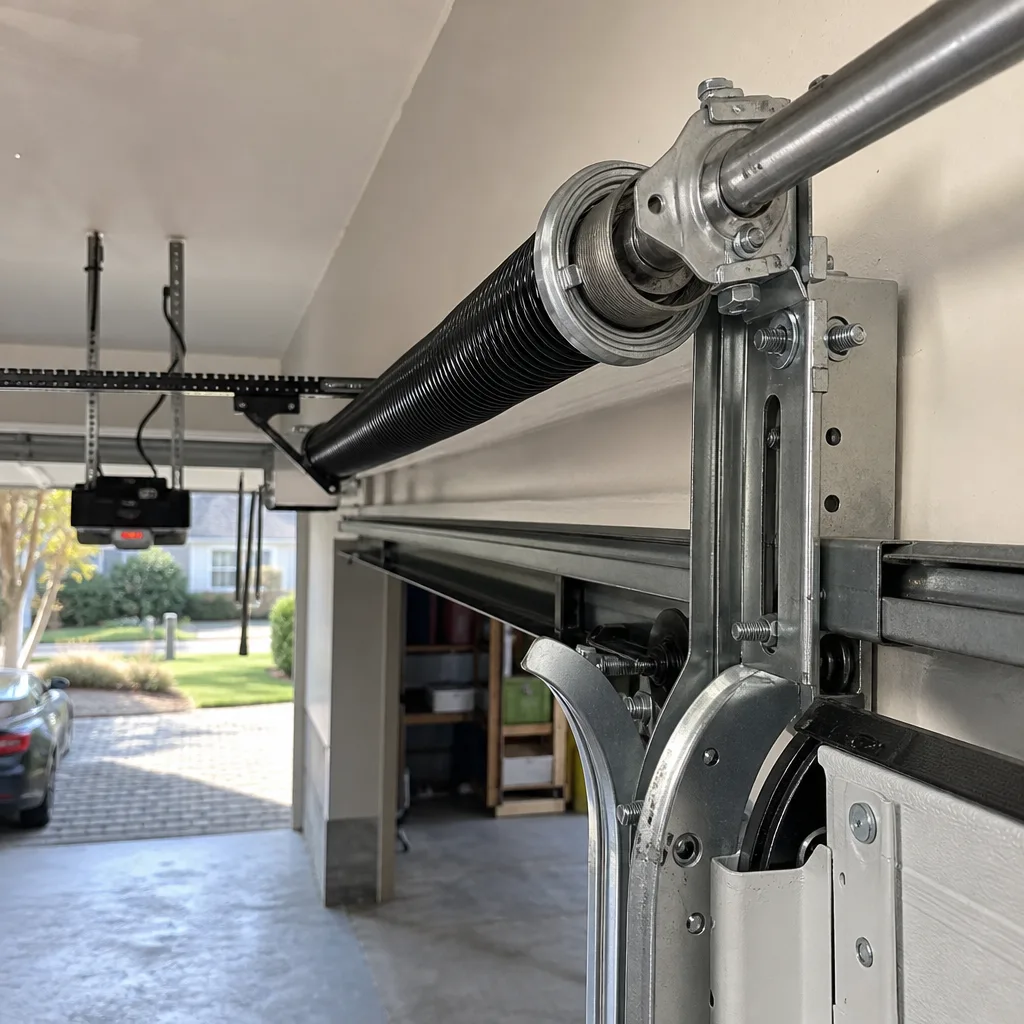 After
After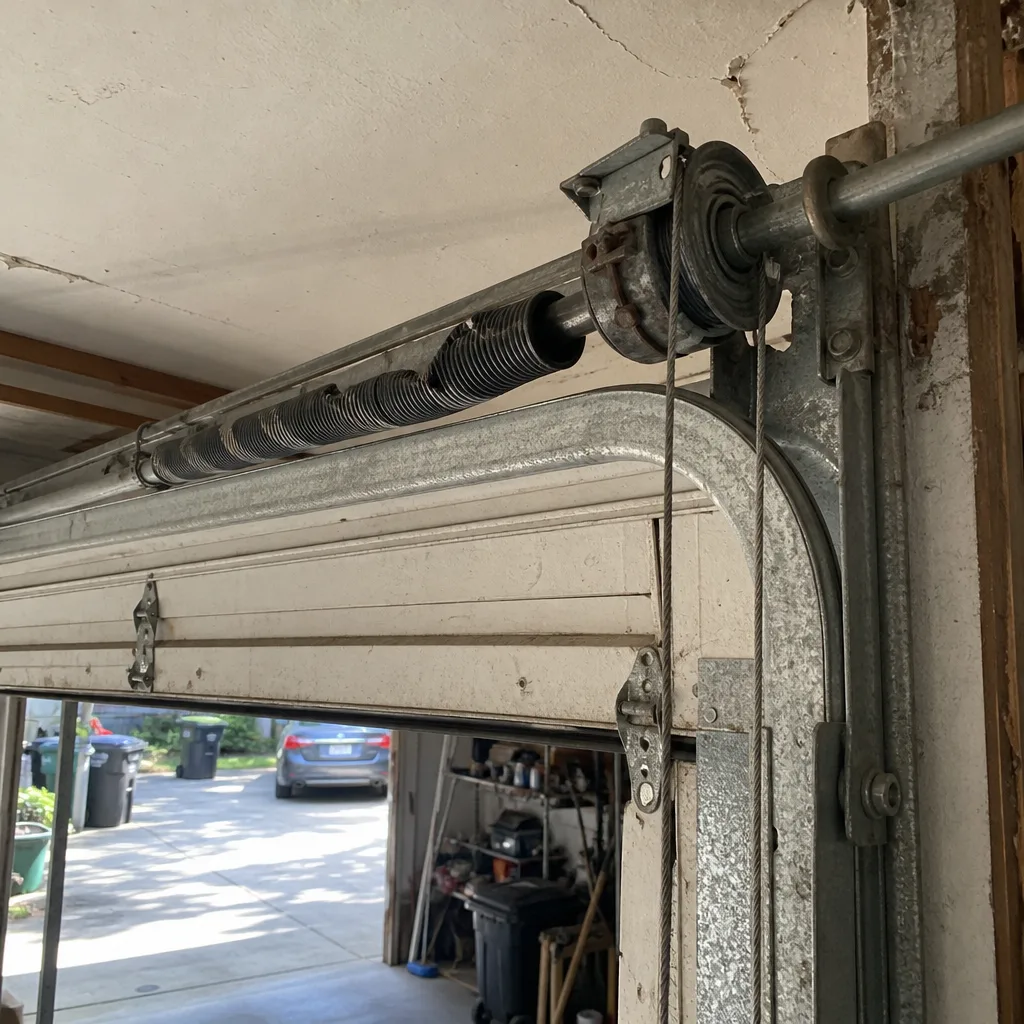 Before
 After
After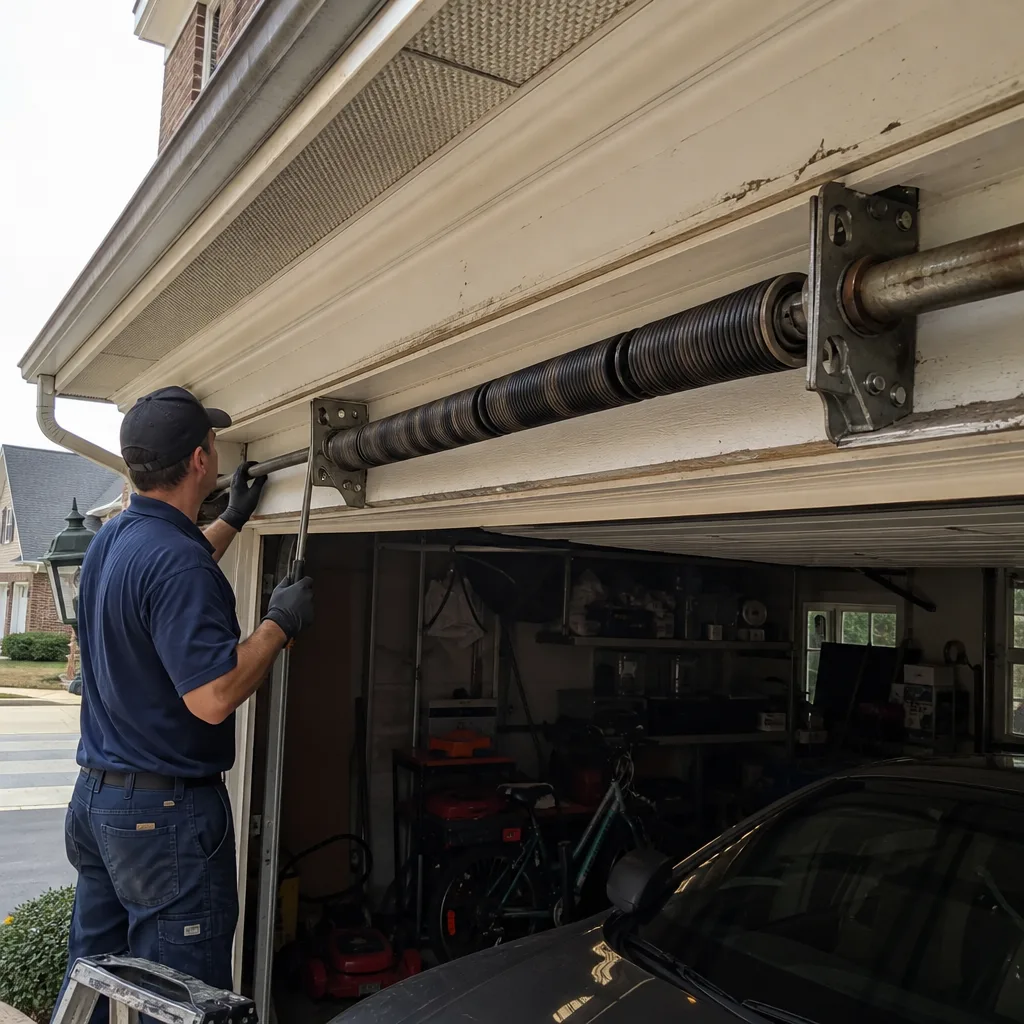 Before
 After
After