
Last updated October 17, 2026
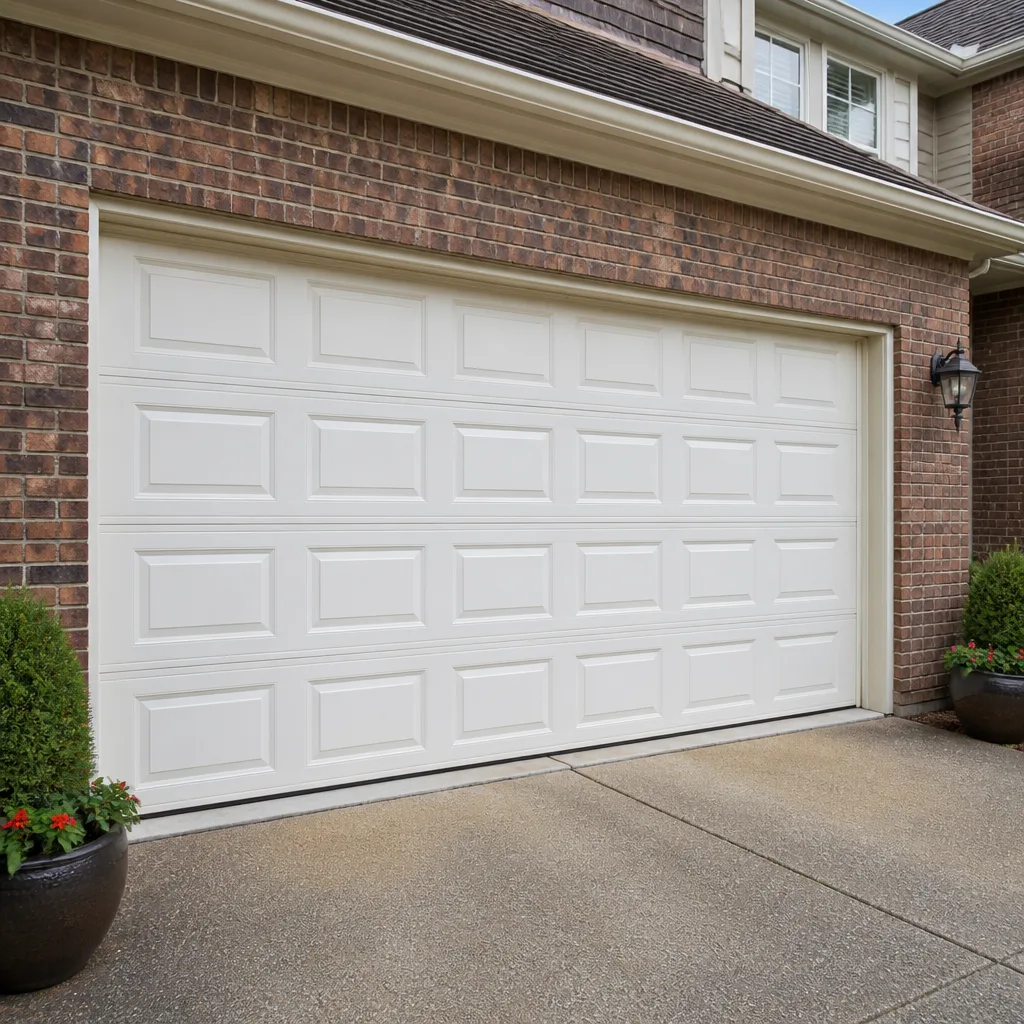 Raised-panel steel
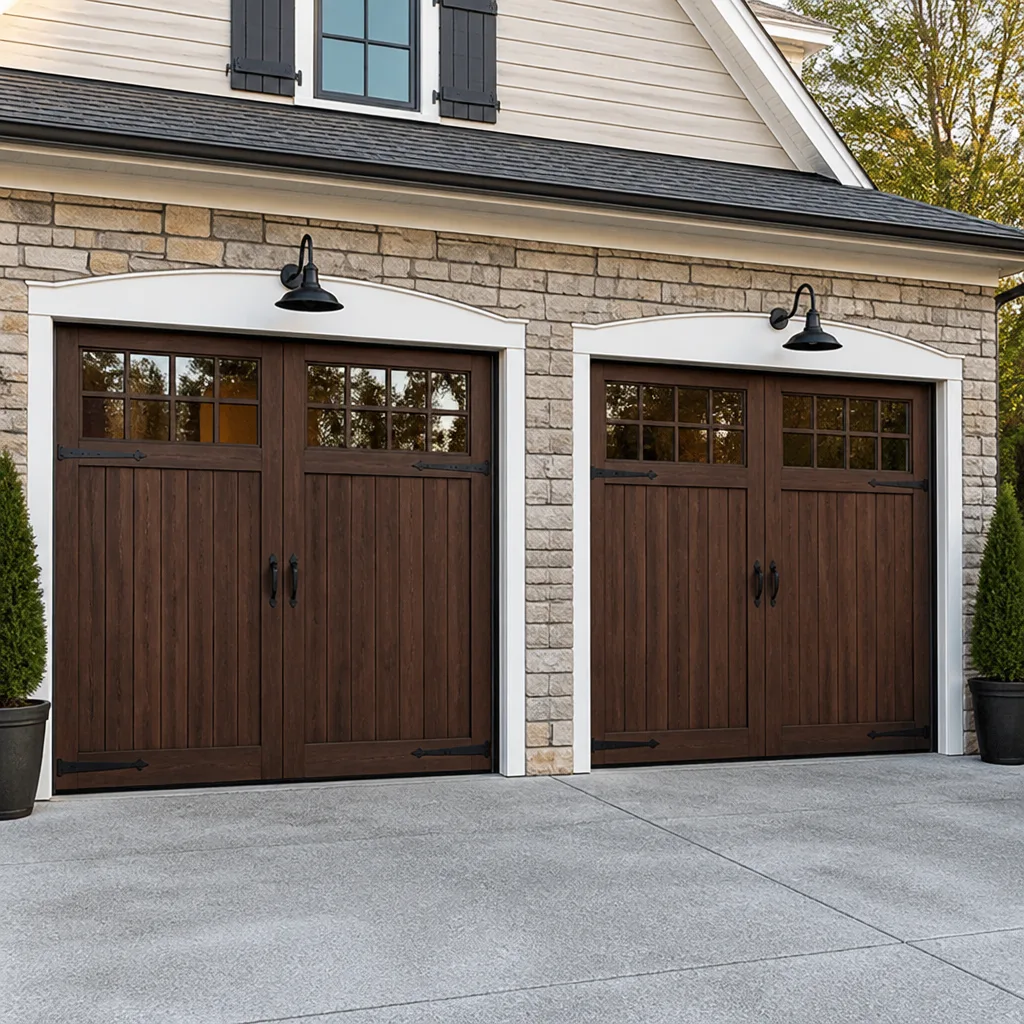 Carriage house
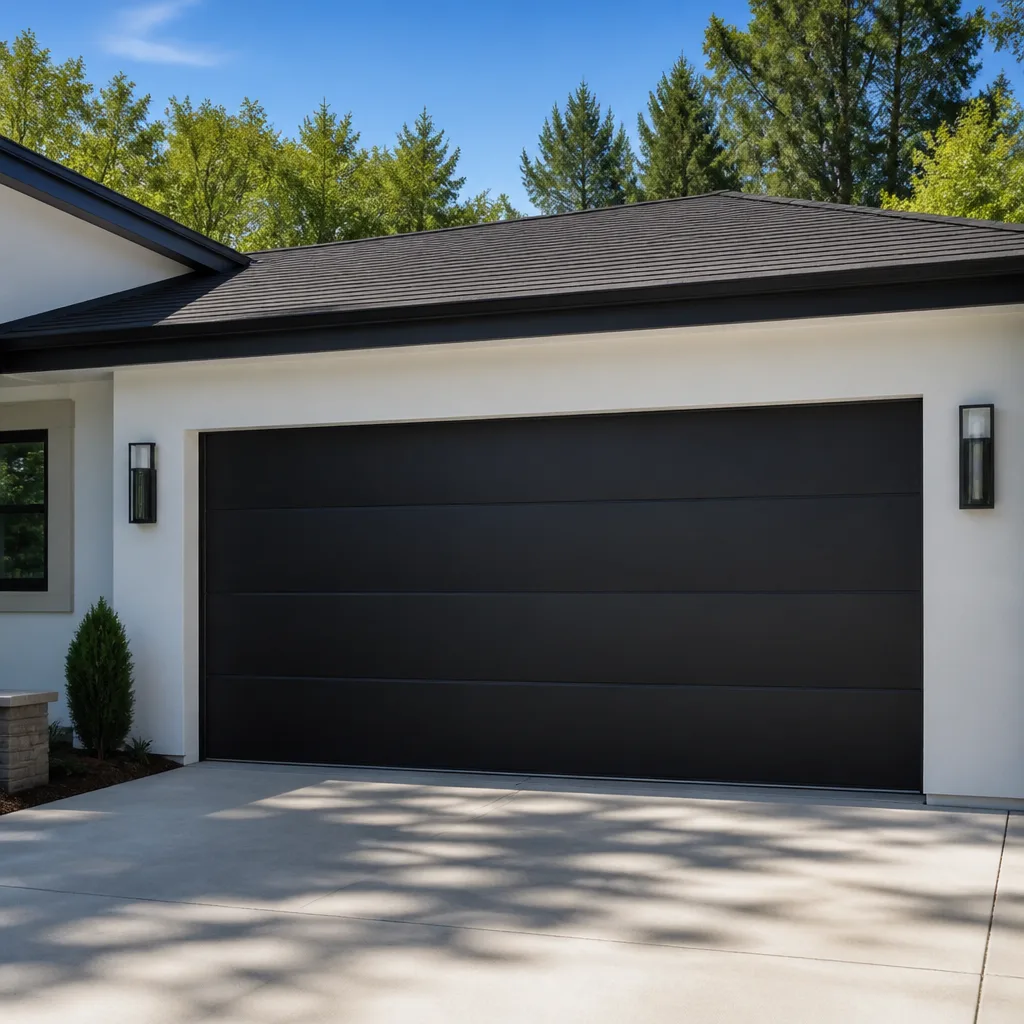 Modern flush
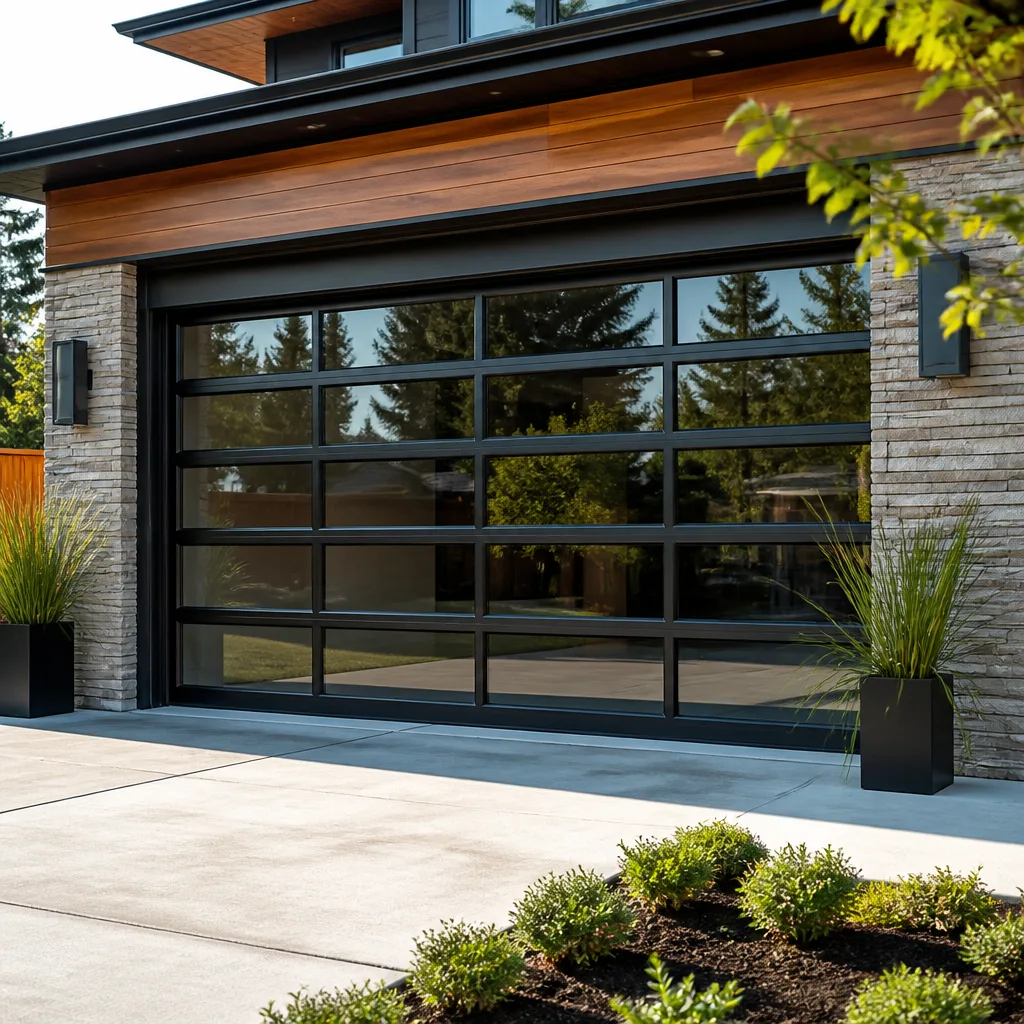 Full-view glass
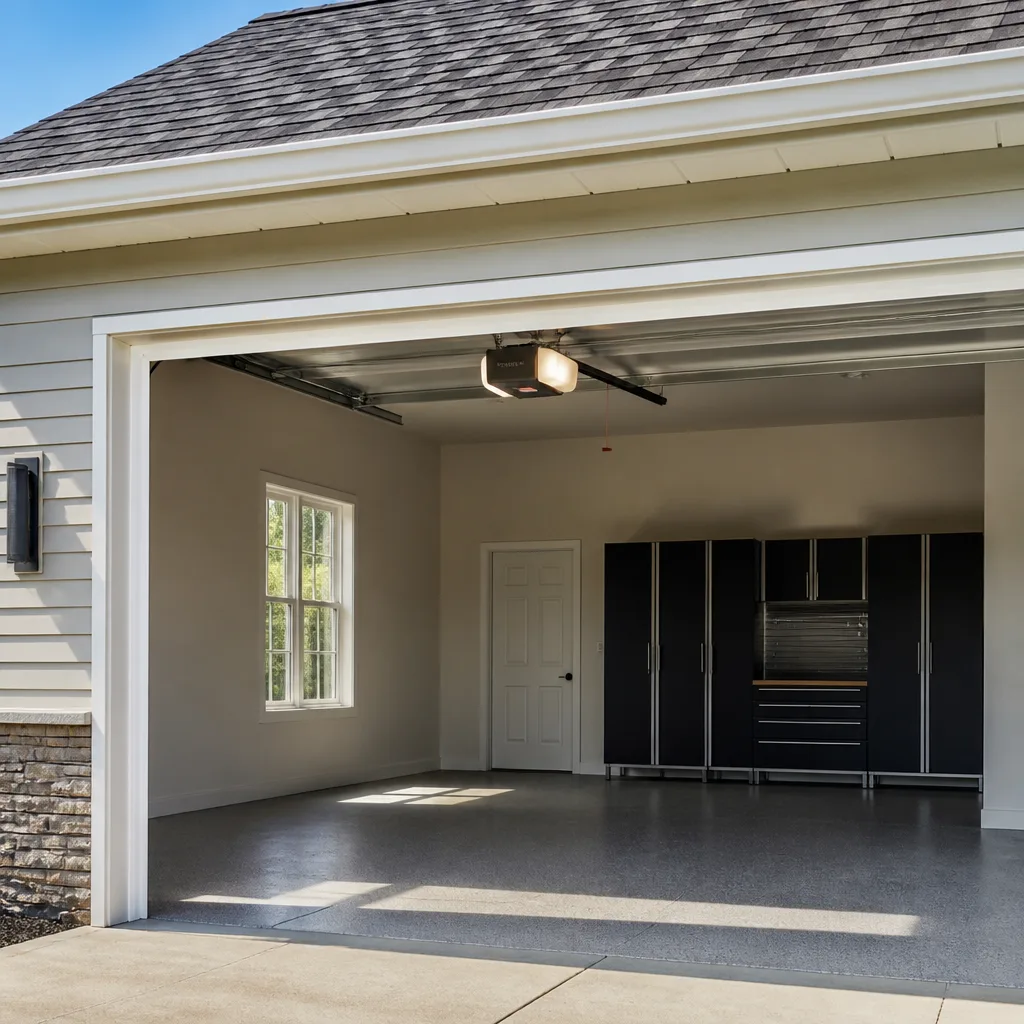 LiftMaster openers
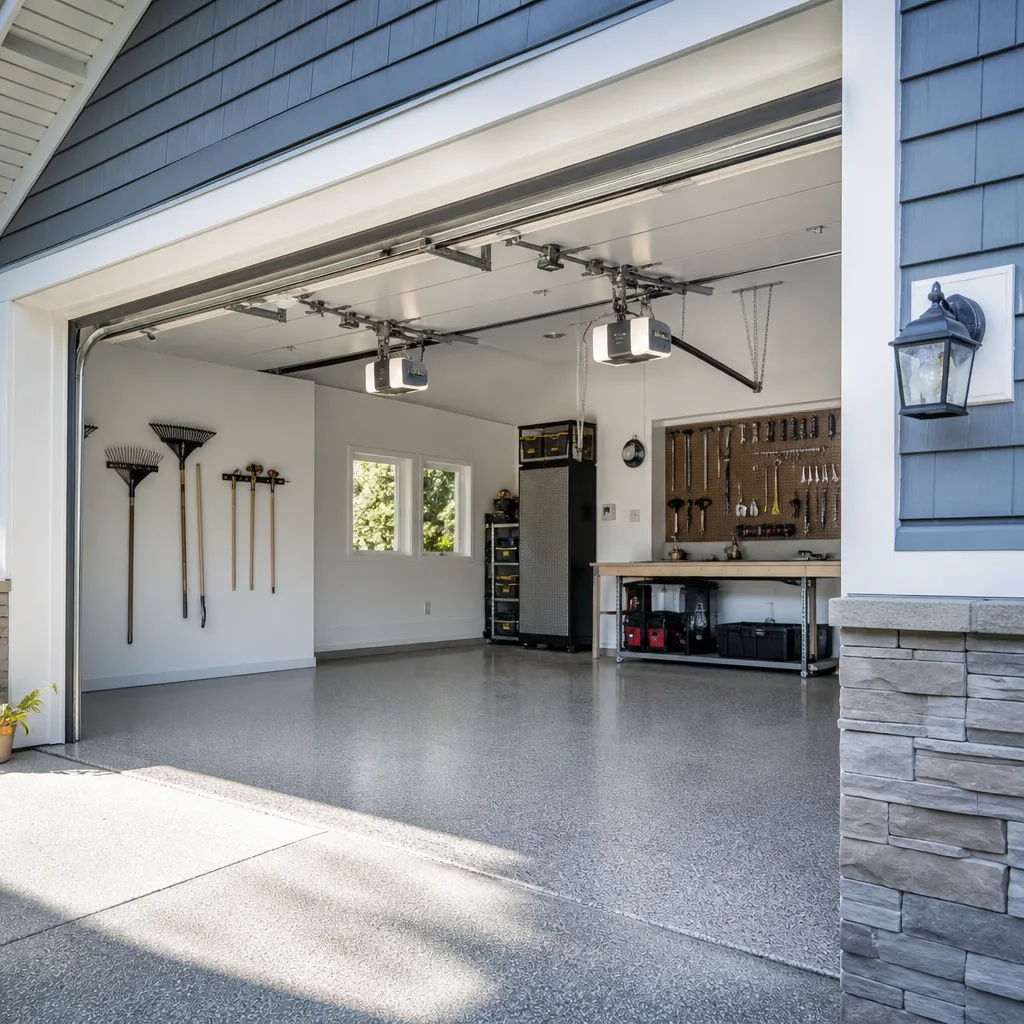 Chamberlain openers
Full 25-point door and opener safety check with every visit - springs, cables, rollers, tracks, and your LiftMaster or Chamberlain opener included
You get a price before we start. It does not change when the truck arrives.
Get your free estimateDIY vs Professional Garage Door: The Alpharetta Homeowner’s Decision Guide
Every year, roughly 20,000 Americans end up in emergency rooms because of garage door injuries, and the most dangerous component isn’t the heavy door panel. It’s the torsion spring. The spring holds enough stored energy to lift a 150-pound door roughly 10,000 times, and when it releases that energy into a hand, forearm, or face, the damage happens faster than a human reflex can respond. This guide exists because homeowners in Alpharetta deserve a clear, honest line between what’s safe to fix with your own two hands and what belongs in the same category as hiring an electrician for a panel upgrade, and you’ll find more guides & resources on our blog for ongoing maintenance. You’ll leave knowing exactly which tasks are genuinely manageable, which carry real risk, what tools and time a “simple” DIY project actually demands, and how to evaluate whether that YouTube tutorial you found is teaching you something sound or something dangerous.
Quick Answer
For Alpharetta homeowners, the DIY-or-pro question depends entirely on the task. Lubrication, sensor alignment, weatherstripping replacement, and simple opener programming are safe, realistic DIY projects for most adults. Torsion spring replacement, cable work, and track realignment are not, and attempting them is how serious injuries happen. When you need a professional for the high-risk work, a reputable Alpharetta garage door company will give you a written price before any work starts, and that’s the standard you should hold every contractor to.
Styles & brands we work with
Table of Contents
- Task-by-Task: What Alpharetta Homeowners Can Safely DIY (and What They Shouldn’t)
- The Physics of Torsion Springs: Why This Specific Risk Isn’t Abstract
- Extension Springs in Older Alpharetta Homes: A Different Risk Profile
- What a DIY Garage Door Opener Installation Actually Requires
- How to Evaluate a YouTube Garage Door Repair Video
- You Already Tried It: What to Tell a Professional About a Partial Repair
- Three DIY Tasks Worth Doing: Lubrication, Sensors, Weatherstripping
- What Alpharetta Garage Door Repairs Actually Cost
Task-by-Task: What Alpharetta Homeowners Can Safely DIY (and What They Shouldn’t)
Let’s draw the line precisely, because a flat “never touch your garage door” or “just watch a video and figure it out” are both bad advice. Here’s the honest breakdown based on what we’ve seen across Alpharetta homes, from Windward to Crabapple to neighborhoods off Rucker Road.
Safe for most homeowners with basic tools
- Lubrication: White lithium grease on the hinges, rollers, and bearing plates; a light silicone spray on the spring itself. Takes 20 minutes. No tension is released. Completely safe.
- Safety sensor alignment: If the door won’t close and the opener lights are flashing, the photo-eye sensors are likely misaligned. Loosen the wing nut, adjust the sensor until the small LED steadies, tighten it back. This requires a screwdriver and patience, nothing more.
- Weatherstripping replacement: The rubber strip along the bottom of the door cracks after about three to five years of Georgia sun and humidity. You can buy a replacement at any hardware store in Alpharetta, slide the old one out, slide the new one in. A utility knife and about 30 minutes finish the job.
- Remote reprogramming: Lost a remote or bought a new car and need to pair the opener. The process is specific to the brand (LiftMaster, Chamberlain, Genie, Raynor), but almost always involves holding a learn button on the motor unit for a few seconds, then pressing the remote button once. Your opener manual has the exact sequence.
Not safe, under any circumstances
- Torsion spring replacement: This is the most dangerous residential repair in the country. The spring sits on a metal shaft above the closed door, wound tight with enough force to break bones instantly. One slip with a winding bar sends that force through your hands, arms, or face.
- Cable replacement: The cables attach to the bottom of the door and route through the springs. If a cable snaps while you’re working near it, the door can drop or the cable can whip. Both outcomes cause serious injury.
- Track realignment or replacement: The tracks guide the door, and when they’re bent or out of true, the entire door weight is bearing on them in ways it wasn’t designed to. Adjusting tracks while the door is connected to springs and cables is a three-person job even for professionals.
What about the gray zone: opener installation, panel replacement, and roller replacement? Those depend on your comfort level. We’ll cover opener installation in detail below. Panel replacement often means a door that’s still fully assembled with springs under tension, so we’d put it firmly in the pro column. Roller replacement is manageable for the bottom rollers but dangerous for the top ones, which sit near the spring bracket and require working at height near a tensioned system.
The Physics of Torsion Springs: Why This Specific Risk Isn’t Abstract
When you read that torsion spring repair is dangerous, the word “dangerous” doesn’t land because you can’t see the danger. The spring looks like a harmless metal coil, maybe two of them, mounted on a steel tube above your garage door. But that coil isn’t a passive component. It’s a wound, loaded mechanism. Here’s the plain explanation of what that means.
A standard torsion spring on a two-car garage door in Alpharetta stores somewhere between 20 and 30 foot-pounds of torque when the door is closed. When the spring unwinds, it releases that force in a fraction of a second. The steel winding bars used to adjust these springs are typically 18 inches long. If the spring releases while you’re holding the bar, that bar accelerates to the speed of roughly 30 miles per hour before your hand can even process that something went wrong.
That’s the specific danger: it’s not that springs “could hurt you.” It’s that by the time you feel the spring slip, the injury has already happened. A broken bone in the forearm, a shattered wrist, a deep laceration to the hand, occasionally a facial fracture when the bar hits the head. These are the injuries emergency rooms in Fulton County see, and they’re almost always from the same scenario: a homeowner watching a YouTube video, buying a set of winding bars at a hardware store, and making one small adjustment more than the spring could tolerate.
Is it possible for a careful, methodical homeowner to replace a torsion spring successfully? Yes, technically. There are people who do. But the margin for error is nearly zero. It’s a single-critical-path job: every step must happen in exact sequence with equal tension on both sides. No do-overs. And unlike a bad drywall patch, a mistake here never stays in the garage. It follows you into an emergency room.
We say this without drama because the decision should be clear, not fear-based. If the spring is broken or needs adjustment, call someone who does this job routinely. The cost is far less than a hospital deductible.
Extension Springs in Older Alpharetta Homes: A Different Risk Profile
Many Alpharetta homes built before the mid-1990s use extension springs instead of torsion springs. You’ll recognize them: they run horizontally, one on each side of the door track, stretching and contracting as the door moves. They stretch when the door closes and contract when it opens. On the surface, they look less dangerous than torsion springs because there’s no visible winding mechanism. That’s misleading.
Extension springs carry a different but equally real risk. The danger is the safety cable. Modern building codes require a steel cable to run through the center of each extension spring, anchored to the wall or track. That cable’s entire job is to contain the spring if it snaps. A spring under tension that breaks free flies across the garage with enough force to dent a car door or break a jaw. The safety cable catches it.
The problem: many older Alpharetta homes either never had safety cables installed or had them corrode and break over decades of Georgia humidity. When the spring fails and there’s no cable, you’ve got a loose projectile. If you have extension springs, the single best thing you can do is check whether each spring has a cable running through its center. If not, or if the cable is frayed, that’s a pro job. Replacing the springs and installing safety cables runs about $180 to $260 for both sides, and it’s the cheapest serious injury insurance you’ll ever buy for your garage.
What a DIY Garage Door Opener Installation Actually Requires
Garage door opener installation falls somewhere between “reasonable weekend project” and “call someone before you damage a wall.” The honest description is that it’s a 4 to 6 hour job for a first-timer, requires a second person for part of it, and hinges on one electrical check that most homeowners skip.
Here’s what a competent DIY attempt actually involves:
- Tools: A stepladder, a stud finder, a drill with drill bits, a socket set, a level, a pair of pliers, a tape measure, and potentially a wire stripper. If you have some of these but not a stud finder and a good drill, budget another $60 to $100 in tools.
- Time: Removing the old opener takes about an hour. Assembling the rail and motor unit takes another hour. Hanging and aligning the new unit: 60 to 90 minutes. Wiring the sensors and wall console: 45 minutes. Programming remotes and keypad: 30 minutes. Add an hour for reading the manual and troubleshooting. Realistically, plan a full afternoon or a Saturday.
- A second person: The motor unit alone weighs about 25 pounds. Lifting it while securing it to the ceiling bracket overhead and keeping the rail level is awkward solo. It’s possible but it’s also the moment people drop the unit or strip a lag bolt.
- The electrical check most people miss: Most opener motors plug into a ceiling outlet. If your current opener is hardwired directly into a junction box, you cannot simply unplug the old and plug in the new. You’ll need to have an outlet installed by an electrician, because modifying hardwired connections in a garage is not a homeowner task for most people. This one check trips more DIY opener installations in Alpharetta than any other single factor. Before you buy the opener, look at how the current one receives power. If there’s no plug, call an electrician or a garage door professional to handle the full installation.
Brand matters here too. LiftMaster and Chamberlain openers use different rail systems than Genie or Raynor. The instruction manuals are good, but only if you read them start to finish before touching anything. The most common DIY mistake is skipping the section on travel limit adjustments, which are what keep the door from slamming into the ground or failing to close all the way.
How to Evaluate a YouTube Garage Door Repair Video
There are genuinely excellent garage door repair tutorials on YouTube, and there are genuinely dangerous ones. The difference isn’t always obvious, especially when a confident host makes a bad practice look routine. Here are three things a credible tutorial always shows that a dangerous one skips.
1. An unpairing or unplugging step before any repair. A credible video starts with “unplug the opener” or “disconnect the power” before any work begins. A dangerous one skips this, often because the host assumes you know. On a torsion spring replacement video specifically, the very first thing should be positioning the door and clamping the track to prevent movement. If you’re 30 seconds in and the host is already holding a winding bar, close the tab.
2. The specific part numbers and tools, named in the video or the description. A credible tutorial shows the exact socket size, the exact bracket type, and ideally the make and model of the door. A dangerous one uses vague language: “grab the right wrench” or “take off this piece here.” The difference matters because garage doors made by Clopay, Amarr, Wayne Dalton, and Raynor sometimes use different hardware. A video that doesn’t tell you which one it’s working on is a video teaching a guess.
3. The moment the host says “if this doesn’t match your setup, stop.” A credible tutorial identifies what configuration it’s teaching. A dangerous one implies every garage door is the same. This is particularly common on spring replacement videos. Torsion springs come in different wire sizes, inner diameters, lengths, and wind directions. Installing a left-wind spring on the right side is exactly as bad as it sounds. If the video doesn’t explain how to identify your spring size before touching it, it’s not a tutorial. It’s a highlight reel.
The practical takeaway: use YouTube to learn lubrication, sensor alignment, and weatherstripping. Those tasks are low-consequence and forgiving. Do not use YouTube as the sole preparation for spring, cable, or track work. It cannot show you the hundreds of repetitions and near-misses that taught the host what they know.
You Already Tried It: What to Tell a Professional About a Partial Repair
We’ve walked into garages in Alpharetta where a homeowner got halfway through a spring replacement and stopped. We’ve also walked into garages where the homeowner finished the job and it’s been “working fine for a week.” Both deserve the same advice: tell us, or whoever you call, exactly what you did.
Why honesty matters:
- Warranty integrity: We back every job we do with the 365-Day Done Right Promise. That promise applies when a spring we installed fails during normal use. It does not apply when a homeowner has partially unwound or reinstalled that spring. If you tell us upfront, we can inspect and price the correction accurately. If you don’t, we find out anyway, and the conversation gets harder than it needed to be.
- Safety, again: A spring that’s been partially wound by someone who didn’t finish the job now carries an unknown tension load. We can’t safely work on a spring we believe to be under a normal load if it isn’t. Disclosure changes how we approach the job from the first step.
- Pricing accuracy: The written price we quote depends on what actually needs to be done. If you’ve already removed the old spring, disassembled the bracket, or stripped a bolt, the job we’re pricing is different from a straight replacement. We’d rather quote you the real number the first time than adjust it on-site.
Here’s what to say when you call: describe the door brand if you know it, describe what you attempted, what you completed, and what made you stop. That’s it. No one at a good company will judge you. We’ve seen every version of this story, and the ones who call and tell the truth get a better outcome than the ones who try to pretend the spring just “looks a little off.”
Three DIY Tasks Worth Doing: Lubrication, Sensors, Weatherstripping
So far this guide has leaned into what not to do. That’s appropriate, because the dangerous tasks are the ones that send people to the hospital. But we don’t want to leave the impression that every garage door issue requires a $125 service call. These three tasks are legitimately achievable for a careful homeowner in Alpharetta, and none of them release spring tension or put you in a position to be injured.
1. Lubrication: The 20-Minute Annual Task
Humidity is the enemy of garage door hardware in Georgia, and Alpharetta’s summer moisture accelerates rust and wear. A yearly lubrication roughly doubles the working life of hinges and rollers. Use white lithium grease for the hinges (the pivot points where the panels join), the roller stems, and the bearing plates at each end of the spring shaft. Use a light silicone spray on the spring itself, which keeps the coils from binding. Don’t use WD-40 as a permanent lubricant; it’s a cleaner and degreaser that strips protection off metal. Don’t lubricate the roller wheels themselves if they’re nylon, which most modern ones are. Metal on nylon doesn’t need it, and the oil attracts grime.
2. Sensor Alignment: The Five-Minute Fix
The symptom is simple: your door starts to close, then reverses and goes back up, and the opener lights flash. That means one or both photo-eye sensors have fallen out of alignment or something is blocking the beam. Check for dog toys, leaf piles, or a bike pedal crossing the beam path first. If the path is clear, loosen the wing nut on the sensor bracket, adjust the unit a few degrees until the small LED on the sensor stops blinking and glows steady, then tighten the nut back. Some sensors have an amber light on one side and a green on the other, some are both green. The important thing is that the light is steady, not blinking. If steady light doesn’t come no matter how you adjust, the sensor may have failed, and that’s a $40 to $80 part plus labor if you’d rather not replace it yourself.
3. Weatherstripping Replacement: The Humidity Tax
Alpharetta door bottoms crack. The sun and moisture break down the rubber, and once it splits, you lose the seal against rain, leaves, and cold air in January. Replacing the bottom seal is a simple slide-out, slide-in job. Measure the old strip’s width, buy the replacement with the matching T-channel profile, cut to length with a utility knife, and feed it in. The ends sometimes need a small drop of super glue to keep the rubber from sliding during cold-weather contraction. Thirty minutes, roughly $15 in material. If you’ve got a two-car door, you’ll need a second pair of hands to hold the strip while it feeds through the channel, or a lot of patience.
What Alpharetta Garage Door Repairs Actually Cost
One of the most useful things we can tell an Alpharetta homeowner is what garage door work costs in this market, specifically. For a detailed breakdown, see our Garage Door Cost Breakdown: The Alpharetta Homeowner’s Reference for 2026. Prices vary by neighborhood and door type, but here are the ranges we see:
| Service | Typical Alpharetta Range | DIY Material Cost | Realistic DIY Time |
|---|---|---|---|
| Spring replacement (single torsion) | $180 – $340 | $60 – $120 | Not recommended |
| Spring replacement (double torsion) | $260 – $450 | $100 – $180 | Not recommended |
| Cable replacement (pair) | $150 – $250 | $25 – $50 | Not recommended |
| Roller replacement (set) | $120 – $200 | $30 – $70 | 2 – 3 hours, bottom only |
| Opener installation (motor unit) | $350 – $600 installed | $180 – $350 | 4 – 6 hours |
| Weatherstripping replacement | $80 – $150 | $15 – $35 | 30 – 60 minutes |
| Sensor repair or replacement | $80 – $150 | $20 – $60 | 30 – 90 minutes |
The cost of a pro is not just parts and labor. It’s the cost of someone who does this four times a day knowing what to look for while they’re in your garage. In our experience, roughly one in five spring replacements includes a secondary issue that a homeowner wouldn’t have spotted: a bent bracket, a cracked hinge, a fraying cable. A DIY repair fixes what you can see. A professional fixes what you can see and checks for what you can’t.
What about emergency pricing? If your spring breaks on a Sunday evening and you need the door opened now, expect to pay a premium over the ranges above, typically $100 to $200 more. Every reputable Alpharetta garage door company charges this. It reflects the technician driving to your house on a Sunday evening, not a greedy markup. If you can wait until a weekday, you’ll pay the standard rate.
Common Mistakes to Avoid
- Buying the wrong spring size based on a guess. Torsion springs are sized by wire diameter, inner diameter, length, and wind direction. The wrong spring either won’t balance the door (making the opener work twice as hard) or won’t fit the shaft at all. Measure or call someone who knows how to read the color-coded markings on the old spring.
- Skipping the unplug step. Even for a simple lubrication job, the opener should be unplugged. It takes five seconds and eliminates the possibility of someone hitting the wall button or the remote while your hands are near the chain or belt.
- Replacing only one spring on a two-spring system. If one breaks, the other has completed the same number of cycles and is near the end of its life. Replacing only one means you’ll be paying for another spring in six months, and now the new and old springs are mismatched in strength. Replace them as a pair.
- Ignoring the door balance check. Disconnect the opener (pull the red release handle) and lift the door manually by the handle. It should lift smoothly with moderate effort and stay wherever you leave it between knee and waist height. If it slams down or shoots up, the springs are wrong for that door, and your opener is wearing itself out compensating.
- Using the wrong lubricant. WD-40 anywhere near garage door bearings is a slow way to destroy them. It dissolves grease, and while the door will be quiet for a week, it’ll be worse after. Use white lithium or a dedicated garage door lubricant.
- Adjusting the spring tension without a winding bar. People try screwdrivers, pry bars, or rebar. All of these are round or square stock that can slip. Winding bars are hardened steel with a perfectly matched diameter for the socket, and they’re $15 to $20 at any hardware store in Alpharetta. If you’re using anything else, you’re effectively holding a loaded weapon in your hand with the safety off.
See the difference
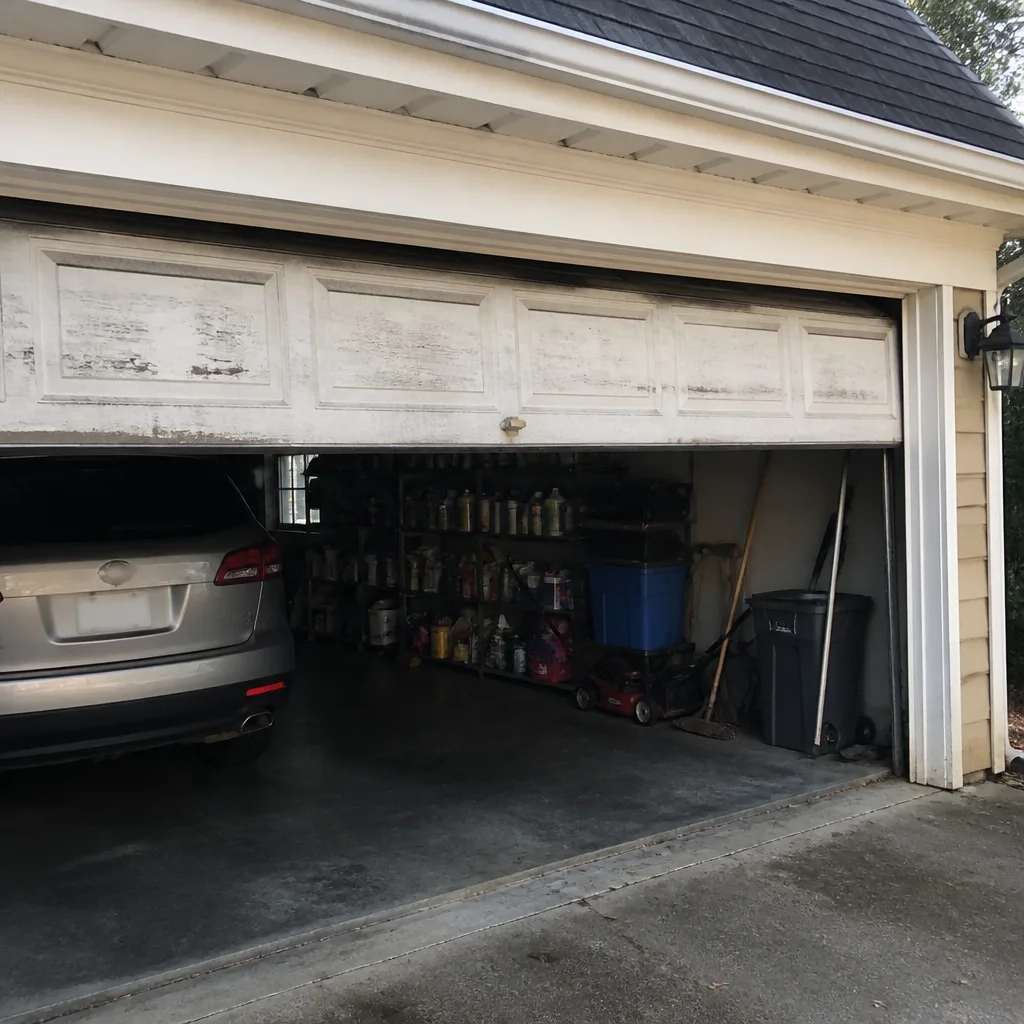 Before
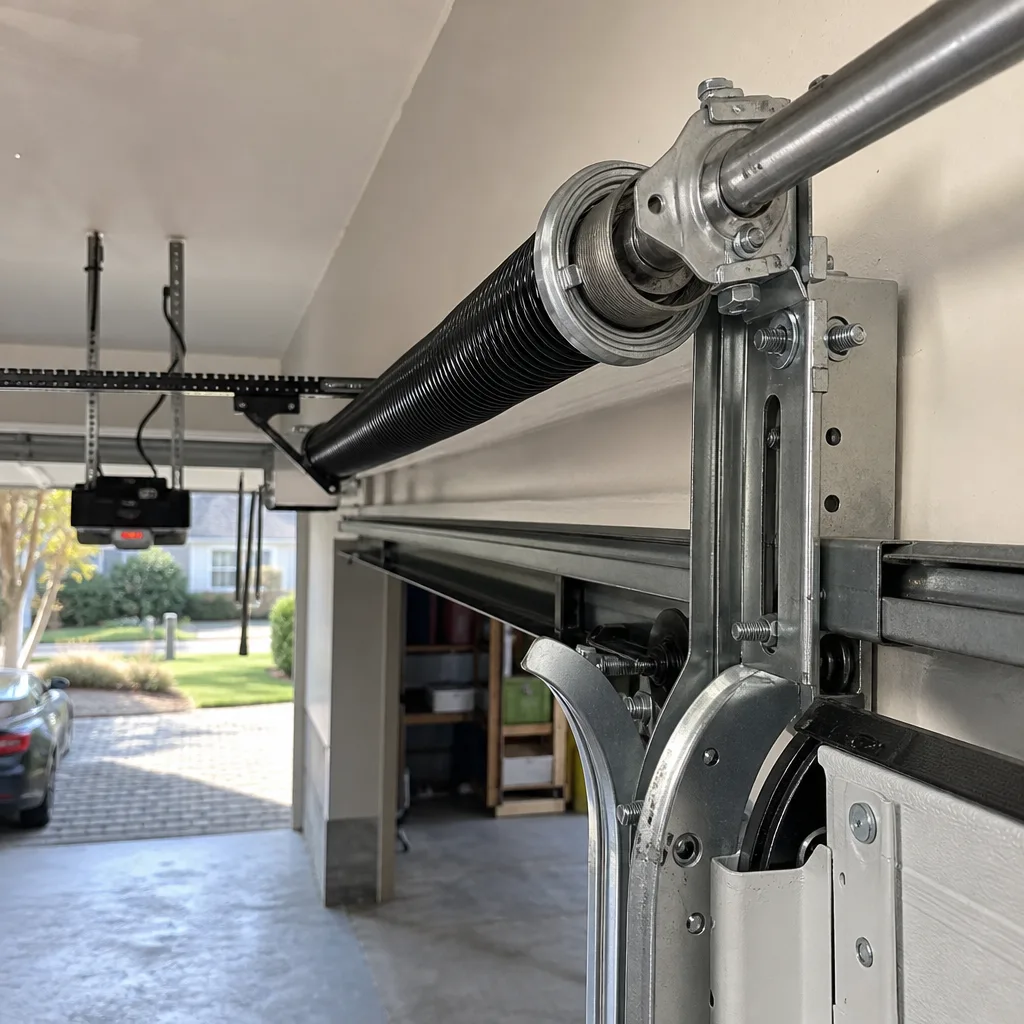 After
After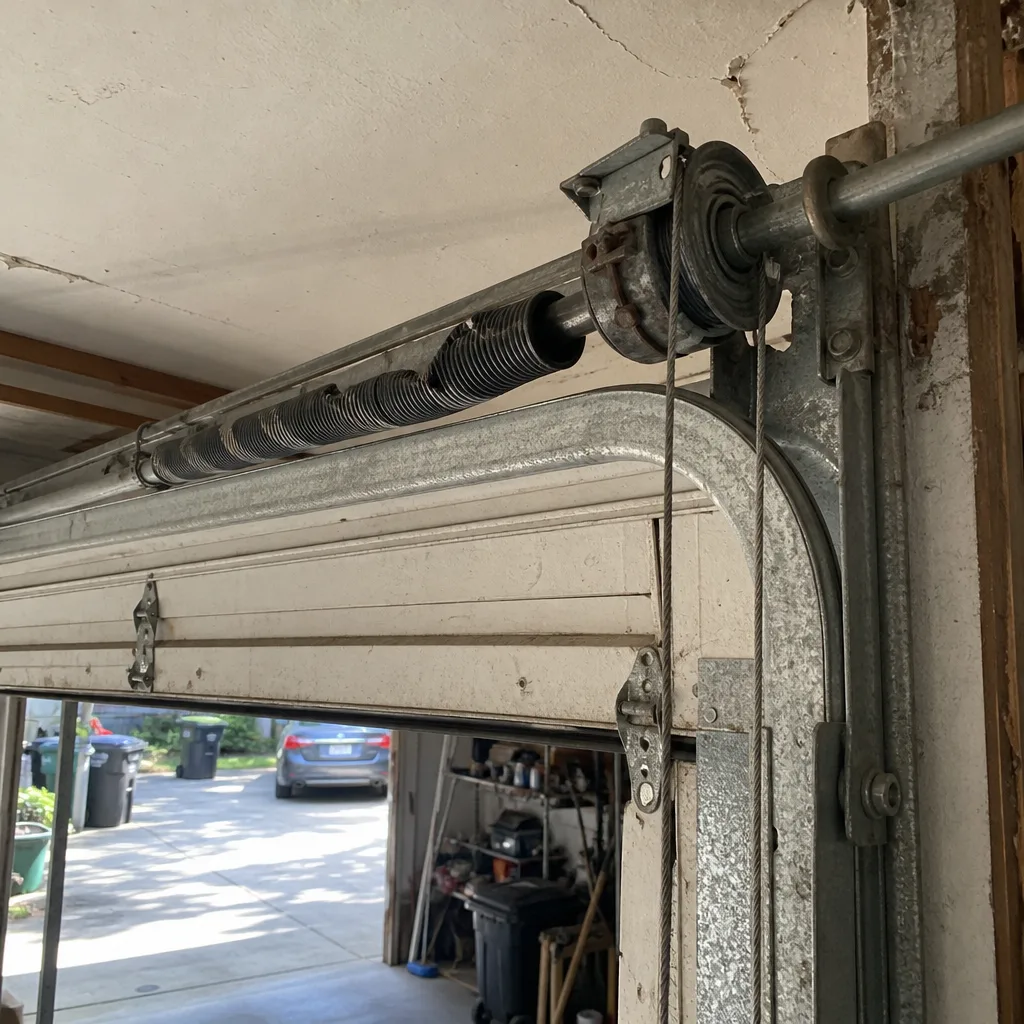 Before
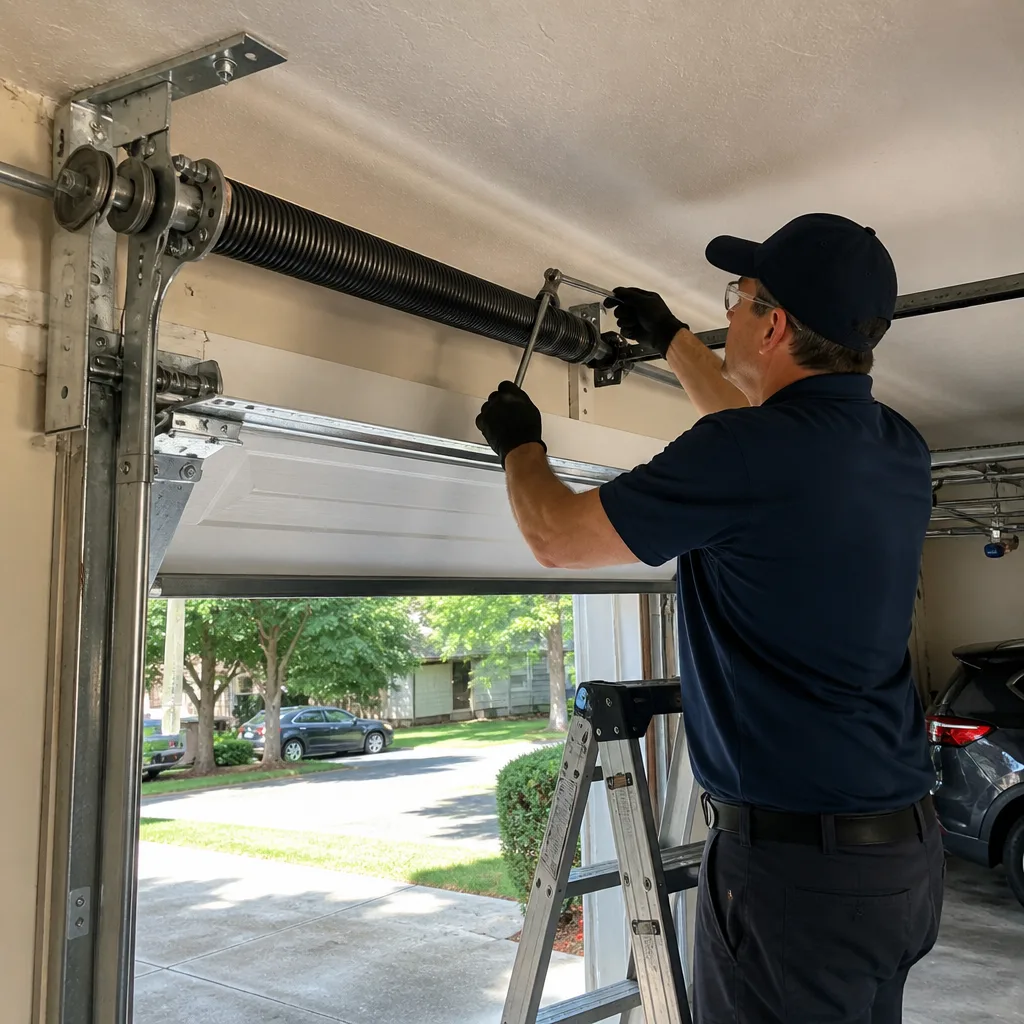 After
After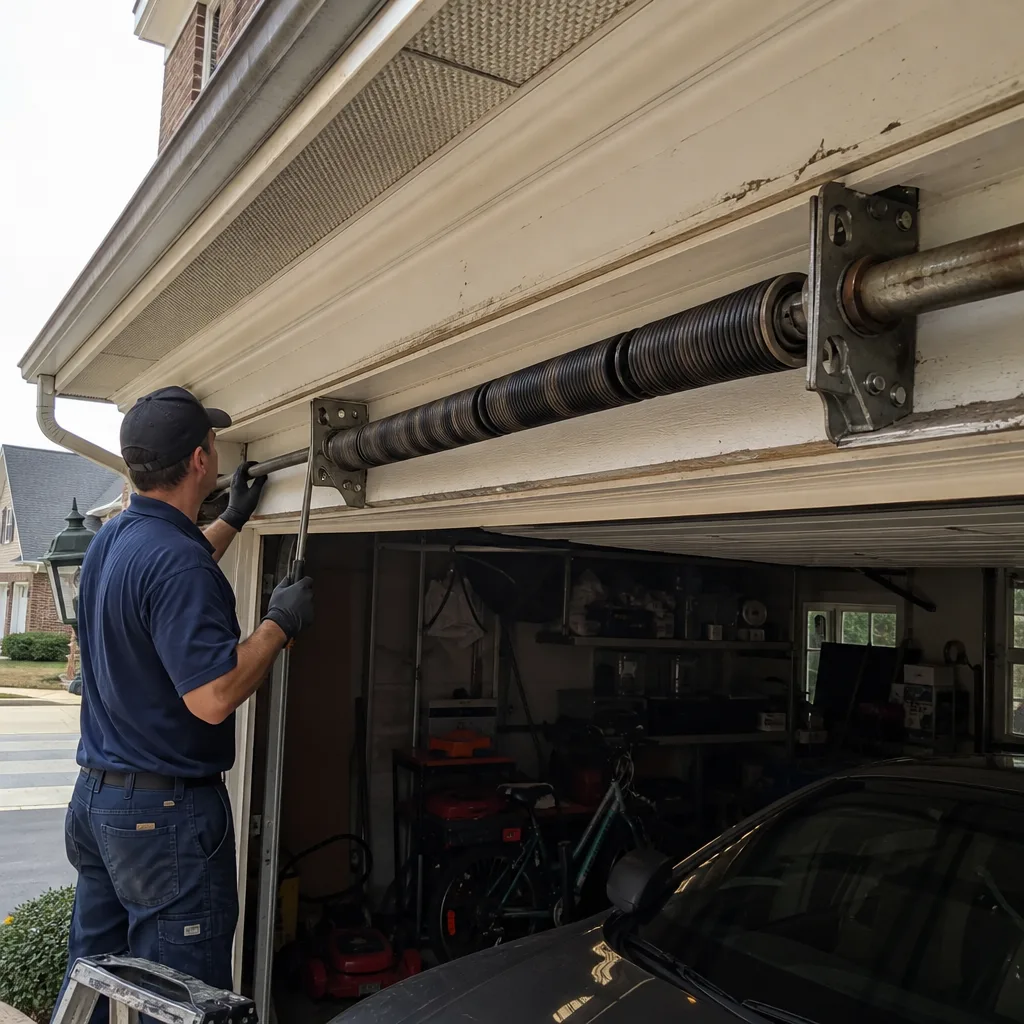 Before
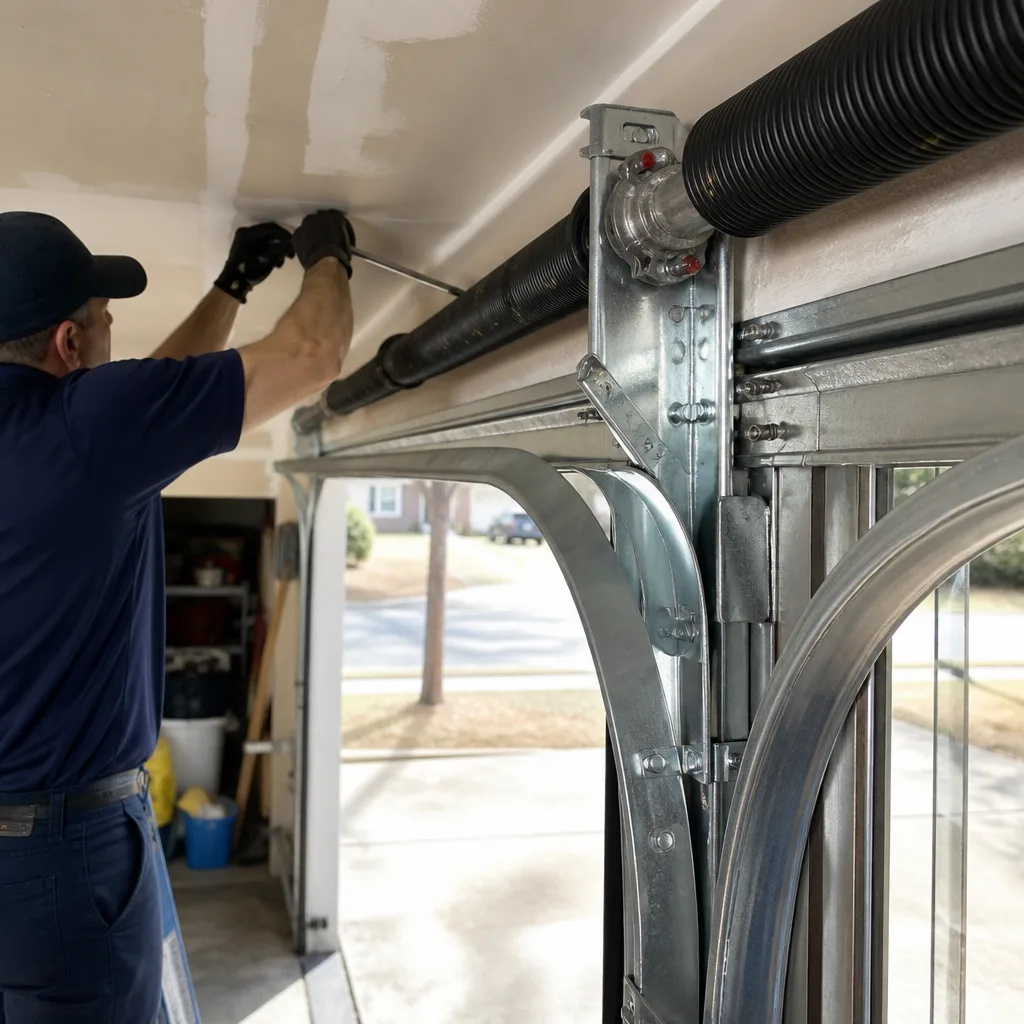 After
AfterWhen to Call a Professional
Call a professional when the spring is broken, the cables are frayed or snapped, the tracks are bent, or the door is jammed in a way you can’t easily diagnose from the floor. For details on local requirements, read Garage Door Permits, Codes & Inspections in GA: What You Need to Know. Call when you’ve got extension springs without safety cables running through them. Call if you’ve already attempted a partial repair and stopped, for the reasons covered above. And call if you simply don’t want to spend a Saturday on a ladder with a stud finder, because time is valuable and opener installation is nobody’s idea of a fun weekend. Fernbrook Garage Doors Alpharetta offers free estimates in Alpharetta, and we cover repair, installation, spring replacement, and opener work. You’ll get a written price before anything starts, so there’s no pressure to decide on the spot. Call (229) 471-5755.
Frequently Asked Questions
You shouldn’t. Torsion springs hold 20 to 30 foot-pounds of stored torque, and when that force releases into a hand or arm, the injury happens before you can react. Extension springs, common in older Alpharetta homes, carry a projectile risk if the safety cable is missing or broken. The material cost of a spring is $60 to $120, but the hospital deductible from a spring-related injury is typically far higher. A professional replacement costs $180 to $450, and the job includes tension calibration, balance checks, and a warranty.
Use this simple test: does the repair require releasing or adjusting spring tension, or working near a cable under load? If yes, call a professional. If the task is lubrication, sensor alignment, weatherstripping, or remote programming, those are DIY-safe for most homeowners with basic tools and careful attention to instructions. Our full task-by-task breakdown is above.
In the Alpharetta market, a single torsion spring replacement typically runs $180 to $340 including the part and labor. A double spring system runs $260 to $450, and if you have extension springs, the pair runs about $180 to $260 including new safety cables. Call us at (229) 471-5755 for a written quote before any work starts.
Tell them exactly what you did, what you completed, and where you stopped. This matters for three reasons: the technician needs to know the actual tension state of the springs before touching them, the pricing depends on what still needs to be done, and the warranty on any new parts depends on the professional knowing what state the system was in when they arrived. Full disclosure protects the outcome and your warranty.
Once a year, and the best time is early fall before the cooler, drier weather sets in. Use white lithium grease on hinges and bearing plates and a silicone spray on the spring itself. Our Garage Door Repair Maintenance Checklist for Alpharetta Homeowners covers the full routine step by step. Skip WD-40, which strips protective grease and accelerates wear. In Alpharetta’s humid summers, yearly lubrication noticeably extends the life of hinges and rollers.
We stock the most common springs, cables, rollers, sensors, and opener parts on every truck, so most standard repairs are completed in a single visit. For less common parts or specific door models (Raynor and Wayne Dalton hardware, for example), we may need to source the part and schedule a follow-up. We’ll tell you that upfront and include it in the written price before any work starts.
The Bottom Line
The DIY-versus-professional question for garage doors isn’t a question of pride or skill. It’s a question of risk and consequence. Lubricating hinges, aligning sensors, and replacing weatherstripping are reasonable weekend tasks that save real money and are genuinely safe. Replacing torsion springs, cables, or bent tracks is not, and no amount of careful YouTube study changes the physics. In Alpharetta, we’ve seen the good version of every story: the homeowner who saved $300 on a weatherstripping job and the homeowner who called us before touching a spring he’d already loosened one turn too far. Both made the right call. You’ll know which one you’re facing if you use the decision framework in this guide, and if the answer is “call someone,” you know where to find us.
Written by Jesse Calder, Owner at Fernbrook Garage Doors Alpharetta, serving Alpharetta since 2002.
For more on what we do, see our Fernbrook Garage Doors Alpharetta home page, read about Garage Door Repair in Alpharetta, explore Garage Door Installation in Alpharetta, or learn more about Garage Door Spring Repair in Alpharetta. We answer the phone 24 hours a day, 7 days a week at (229) 471-5755, and every visit includes a written price before any work starts.